

Best Trading Platforms for Nigerian Traders
Discover how Nigerian traders can pick the best global trading platform 🌍 with insights on fees, security, features, and local regulations for smoother trades 📈.
Edited By
Ethan Clark
Fusion energy presents a promising alternative to Nigeria's current power challenges. Unlike conventional sources, fusion produces energy by fusing atomic nuclei, releasing enormous power without the harmful emissions typical of fossil fuels. This technology could offer Nigeria a more reliable, cleaner source of electricity, helping tackle the frequent power outages that frustrate industries and households alike.
Currently, the global fusion market is still in development, with countries like the US, China, and the UK leading research through projects such as ITER and private ventures like Commonwealth Fusion Systems. These efforts show that commercial fusion plants might become viable by 2035 or so. Nigeria, although yet to participate actively, stands to benefit significantly if it can position itself early in this emerging sector.
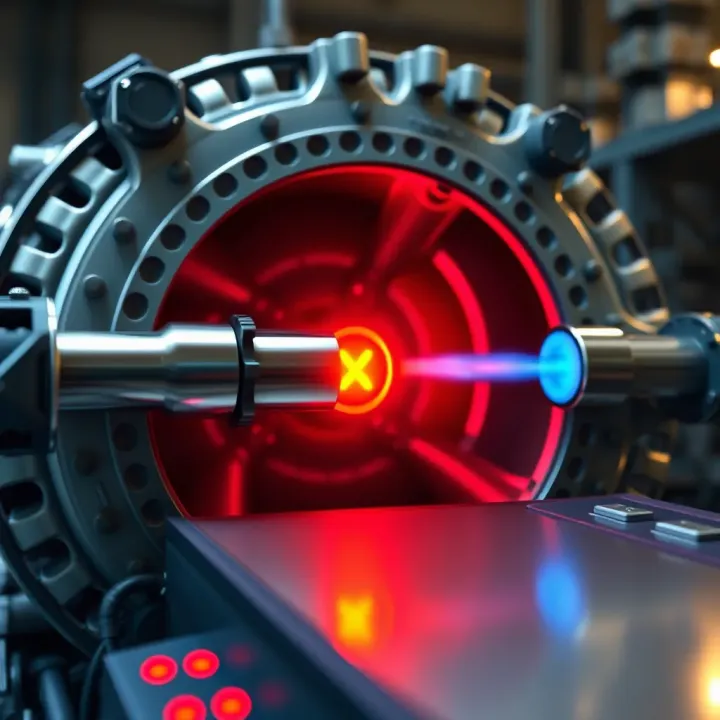
For investors and traders, fusion offers new frontiers. Start-ups and research firms involved in fusion technology will likely attract growing capital once proof-of-concept advances beyond experimental reactors. Investors tied to energy futures and commodities might find fusion-based stocks or innovations a fresh, high-stake opportunity, given fusion’s potential to disrupt the traditional energy supply chain.
However, challenges remain. Fusion energy requires advanced technical infrastructure, massive upfront investment, and skilled human capital — areas where Nigeria still struggles due to limited research funding and infrastructure deficits. Also, integrating fusion-generated power into the Nigerian grid will demand upgrades to transmission systems, given the erratic supply issues currently encountered.
For Nigeria’s fusion prospects to materialise, strategic partnerships with global fusion leaders and targeted government policies supporting research, development, and energy infrastructure are essential.
Understanding the fusion market means recognising these opportunities alongside the hurdles ahead. Traders and financial analysts looking into Nigeria's energy sector must weigh fusion’s medium- to long-term promise against its immediate feasibility and investment risk. Moving towards fusion could reshape Nigeria's energy landscape, improving economic output and environmental outcomes if handled with clear policies and sound market strategies.
In the next sections, we will explore Nigeria’s specific prospects in fusion technology, followed by an analysis of economic benefits, key challenges, and practical steps to prepare for this new energy frontier.
Understanding the fundamentals of fusion energy is key for anyone considering the emerging fusion market, especially in Nigeria. Fusion promises a reliable, low-carbon source of power, which could significantly impact Nigeria's energy security and economy. Grasping how fusion works and the technologies involved helps investors and traders better assess risks and opportunities in this sector.
Fusion and fission are two nuclear processes, but they operate in fundamentally different ways. Fission splits heavy atomic nuclei, such as uranium, into smaller parts, releasing energy. This reaction powers most existing nuclear plants but generates long-lived radioactive waste and poses some safety risks. Fusion, on the other hand, combines light nuclei like isotopes of hydrogen to form heavier nuclei, releasing energy in the process. Because fusion fuel is abundant—mainly isotopes from water—and the reaction produces far less harmful waste, it's considered cleaner and safer.
For Nigeria, which currently faces challenges with stable power generation and environmental concerns, fusion's advantages could provide a better alternative to the coal and gas plants dominating the grid.
Fusion relies on overcoming the repulsive force between positively charged nuclei so they can merge. This requires extremely high temperatures—millions of degrees Celsius—creating plasma where atoms are fully ionised. At these conditions, nuclei collide at high speed, fusing and releasing enormous energy, mainly as heat.
One practical example of fusion's power is the sun, which sustains its energy output through fusion. Harnessing this process on Earth involves replicating these extreme conditions safely and continuously, a challenge fusion scientists are addressing through various technological methods.
Magnetic confinement is the leading approach, using strong magnetic fields to contain plasma inside doughnut-shaped devices. Tokamaks, like the ITER project, use a combination of magnetic coils and electric current in plasma to keep it stable. Stellarators use complex magnetic coils to create twisted fields that can confine plasma without the current's instability.
Their practical relevance lies in their potential for sustained fusion reactions. ITER aims for steady-state operation producing more energy than it consumes, a major milestone toward commercial fusion power. Nigeria’s investment or participation in such projects could open doors for technology transfer and capacity building.
This method focuses on using powerful lasers or particle beams to compress and heat small fuel pellets rapidly, triggering fusion before the target disperses. It resembles a miniature explosion, with energy released in microseconds.
Facilities like the National Ignition Facility in the US demonstrate this approach's potential. For Nigeria’s energy sector, inertial confinement offers insights into alternative ways of harnessing fusion, especially for applications where modular or smaller-scale reactors might be useful.
Developers are also exploring other methods such as aneutronic fusion, which produces minimal neutrons, reducing material damage and radiation issues. Concepts like compact spherical tokamaks or magnetised target fusion blend ideas from both magnetic and inertial confinement to improve efficiency and lower costs.
These alternative designs, often pursued by start-ups and research bodies, offer practical benefits in terms of faster deployment and reduced complexity. For Nigerian investors, tracking such innovations could reveal early opportunities in the fusion market beyond large international projects.
Fusion energy's diverse approaches underline its potential but also the technical hurdles that remain. Familiarity with these fundamentals enables better strategic decisions in Nigeria’s emerging fusion market.
Tracking global progress in the fusion market helps Nigerians understand where the technology stands and the timeframes for its potential adoption. Fusion energy, though still in development, promises a cleaner and more abundant power source than fossil fuels. By looking at breakthroughs abroad, Nigerian investors and policymakers can gauge partnerships, risks, and entry points into this market.

ITER is the world’s largest fusion experiment, located in France, involving 35 nations including Nigeria’s trading partners. It aims to prove that fusion can produce more energy than it consumes—a milestone many fusion projects still chase. This international collaboration offers lessons on funding, research coordination, and technical hurdles relevant to Nigeria's ambitions.
Beyond its scale, ITER provides a platform where Nigerian scientists and engineers could learn from top experts, potentially transferring skills and knowledge important for any local fusion initiatives. It acts as a barometer for fusion’s viability and commercial readiness, which investors should watch carefully.
In recent years, private companies have injected innovation and capital into fusion research. Start-ups like Commonwealth Fusion Systems and TAE Technologies, mostly based in the US, are developing compact fusion reactors with faster timelines. These firms attract venture capital interest, signalling growing confidence in fusion's commercial future.
This private momentum contrasts the slower pace of government projects like ITER, offering potential for quicker deployment. Nigerians with an eye on the fusion market may explore partnerships with such start-ups or consider investing in them to tap into early commercial breakthroughs.
Significant steps forward include the recent successes of the National Ignition Facility in the US, producing brief fusion reactions that release more energy than put in during laser shots. Iter has also completed construction of key reactor components, moving closer to actual fusion experiments.
These milestones demonstrate fusion’s technical challenges are gradually being overcome, which reassures investors and governments worldwide. For Nigeria, this means fusion is not just theoretical but gradually approaching practical demonstration, signalling when it might become part of the global energy mix.
Experts estimate that commercial fusion power plants could be operational by the 2030s or 2040s, though this depends on sustained technical progress and investment. Private companies aim for earlier timelines, with some targeting demonstration plants by the late 2020s.
Such timeframes matter for Nigeria's energy planning because fusion will not replace current sources overnight. However, knowing when fusion might become commercially viable helps Nigerian policymakers and investors devise long-term strategies, aligning resources with the inevitable shift towards cleaner energy.
Fusion technology's global development path provides Nigerian stakeholders with practical insights into investment timing, technology adoption, and potential partnerships. Staying informed about international progress equips Nigeria to participate actively when the technology matures.
Nigeria's energy sector faces pressing challenges, making the potential impact of fusion energy development highly relevant. Fusion promises a clean, reliable, and high-capacity power source that could reshape the country's power landscape, addressing persistent supply gaps and supporting economic growth.
Nigeria currently relies heavily on natural gas, hydroelectric power, and some oil-fired plants for electricity generation. Natural gas accounts for about 70% of the installed capacity, with hydroelectric sources providing roughly 25%. However, power generation often falls short of demand, leading many businesses and homes to depend on costly generators. This imbalance limits industrial productivity and underscores the need for more dependable energy sources.
Power supply in Nigeria suffers from frequent outages, voltage fluctuations, and poor grid infrastructure. The transmission network struggles to deliver generated electricity efficiently, causing excessive technical losses and instability. Inconsistent supply forces consumers to incur additional costs running diesel generators, which adversely affect economic competitiveness and contribute to environmental pollution.
Reliable energy is the backbone of economic progress; without it, Nigeria's industries and services remain hamstrung.
Fusion technology offers Nigeria an opportunity to cut its dependence on fossil fuels, especially natural gas and diesel, which currently dominate electricity generation and standby power. Transitioning to fusion-based power plants could reduce carbon emissions substantially, aligning with global environmental commitments. In addition, fusion's fuel—usually isotopes like deuterium—can be sourced from water, abundant in Nigeria, offering a more sustainable energy future.
As Nigeria's urban centres expand and industries grow, energy demand is set to rise sharply. Fusion plants, with their potential for continuous, high-output power, could meet this demand better than intermittent renewable sources. Stable electricity from fusion would attract local and foreign investment, enabling factories, tech hubs, and service sectors to operate without costly power disruptions. Moreover, fusion-driven energy could reduce generator use, lowering operational costs for businesses and households.
In essence, fusion energy’s development in Nigeria could be a game-changer—providing a steady, clean power supply that supports economic expansion and reduces environmental impact. However, realising these benefits will require strategic investments, policy support, and collaboration between government, private sector, and international partners.
Economic and environmental factors will significantly shape Nigeria's efforts to tap into fusion energy. This technology's promise hinges not just on power output but on balancing upfront costs with long-term benefits, all while ensuring environmental safety. For investors and policymakers watching closely, understanding these elements is key to mapping a viable fusion roadmap.
Setting up fusion plants demands substantial capital outlay. Estimates for cutting-edge fusion installations run into tens of billions of naira, given the expensive equipment like superconducting magnets, precision lasers for inertial confinement, and complex control systems. For example, the International Thermonuclear Experimental Reactor (ITER) project in France has cost over €20 billion so far, signalling the scale of investment required. Nigeria must therefore prepare for not only the initial build costs but also continuous funding for maintenance and upgrades.
Such capital demands pose challenges but also opportunities for the Nigerian economy. Investment partnerships—both local and international—could spread the financial load, while government incentives may attract private sector interest. Strategic allocation of resources will be crucial, especially given Nigeria’s competing needs in infrastructure and social services.
Despite the hefty capital requirements, fusion projects can drive significant job creation across various sectors. Beyond construction jobs, there will be roles in engineering, research and development, and plant operations. For instance, Nigerian universities and tech hubs may collaborate on developing specialised skills, laying groundwork for a homegrown fusion workforce.
Furthermore, fusion technology development can act as a catalyst for broader industrial and technological progress. Local companies could emerge to supply components or software, promoting Nigeria’s participation in the global high-tech supply chain. This aligns with Nigeria's goal to diversify the economy beyond oil and agriculture.
Fusion energy’s appeal partly lies in its potential to provide abundant power with minimal greenhouse gas emissions. Unlike coal or gas plants, fusion produces energy without burning fossil fuels, offering a path away from Nigeria’s heavy reliance on gas and diesel generators. This shift could offer relief amid Nigeria's ongoing struggle with power sector emissions and air pollution.
Lower carbon emissions contribute not just to better health outcomes but also to compliance with international climate commitments. If deployed effectively, fusion could cut Nigeria’s carbon footprint significantly, supporting sustainable urbanisation and industrial growth.
While fusion is cleaner, it is not free from environmental concerns. Fusion reactions produce radioactive materials mainly from neutron activation of reactor structures rather than the fuel itself. Handling and disposing of this low-level radioactive waste safely is a complex task requiring robust protocols and facilities.
Nigeria will need to develop or adapt technologies for waste containment and recycling to minimise environmental risks. Lessons from countries operating nuclear fission reactors can guide these efforts. Failure to manage such risks appropriately might undermine public confidence and delay regulatory approvals.
Investing wisely in fusion energy brings an opportunity to leapfrog traditional power challenges. Yet, understanding the costs and environmental trade-offs remains critical for Nigeria’s long-term energy transformation.
Addressing the obstacles and exploring future prospects in Nigeria's fusion market is key to determining how this advanced energy source can fit into the country's power mix. Nigeria faces a unique set of challenges due to its current infrastructure and workforce limitations but also holds promising opportunities for growth with proper planning and partnerships.
Nigeria currently lacks the specialised workforce needed for developing and maintaining fusion technology. Fusion requires expertise in plasma physics, advanced engineering, and materials science—fields still nascent in most Nigerian universities and research centres. Without investment in training programmes and research facilities, Nigeria risks falling behind. For example, the Nuclear Physics Department at the University of Ibadan could serve as a foundation if properly funded and expanded.
The existing Nigerian electricity grid struggles with reliability due to ageing infrastructure and limited capacity. Integrating fusion-generated power would demand significant upgrades to transmission and distribution networks. Fusion plants typically provide steady, high-output power but need a resilient grid to deliver this without losses. Coordinating fusion with intermittent renewable sources like solar could optimise energy supply, but this complexity requires advanced grid management systems still uncommon in Nigeria.
Clear government policies and incentives will be pivotal in encouraging fusion market growth. Investment-friendly frameworks such as tax breaks and grants can attract private sectors and international players. For instance, Nigeria’s recent policy adjustments in the solar sector, offering import duty waivers on solar equipment, demonstrate the impact of such incentives. Extending similar support to fusion technology would accelerate development.
Although fusion is safer than traditional nuclear fission, robust safety and regulatory standards must be established before deployment. Nigeria’s Nuclear Regulatory Authority will need to adapt guidelines specific to fusion’s operational risks and waste profile. Ensuring transparent safety protocols will build public trust and meet international benchmarks, essential for attracting foreign investment.
Collaborating with established international fusion organisations offers Nigeria access to technical know-how and funding. Joining consortia like ITER or partnering with fusion start-ups could bring advanced technologies faster to Nigeria. Additionally, knowledge transfer initiatives could help build local expertise, making Nigeria a credible player in the fusion space.
Nigeria’s growing tech ecosystem and increasing investor interest in clean energy present chances for homegrown innovation in fusion-related technologies. Ventures could focus on adapting fusion tech to local conditions or developing supporting systems like grid stabilisation software. Local startups and investors are gradually steering funds towards energy technologies; including fusion in their portfolios could diversify and strengthen the energy sector.
Nigeria's fusion future hinges on sound policies, skilled human resources, and strategic alliances. Tackling these challenges head-on will unlock fusion's potential to fuel Nigeria's industrial growth and energy security.
Discover how Nigerian traders can pick the best global trading platform 🌍 with insights on fees, security, features, and local regulations for smoother trades 📈.

Looking to pick the right broker in Nigeria? 📊 Learn about broker types, fees, regulation, and top tips to choose confidently and trade smart.

🔑Step-by-step guide for Nigerian traders on Videforex login, fixing common issues, securing accounts, and managing profile settings effectively.

Explore binary trade basics and risks 📉, Nigerian legal tips ⚖️, and smart strategies 💡 to trade confidently and safely in Nigeria’s market.
Based on 8 reviews