

Understanding XAUUSD Price: Key Insights
📈 Explore XAUUSD price dynamics, key influences, market trends, trading strategies & risks tied to gold value in USD – essential for traders and investors.
Edited By
Ethan Clark
Nigeria stands out as Africa’s largest economy, thanks to its vast population and diversity of resources. Understanding the major markets within the country is like holding a roadmap to its economic pulse. Whether you're a trader, investor, or financial analyst, knowing which sectors keep Nigeria ticking is crucial for making informed decisions.
This article digs into key sectors such as oil and gas, agriculture, telecommunications, manufacturing, and financial services. We will examine their current role, the obstacles they face, and where opportunities lie for growth or investment.
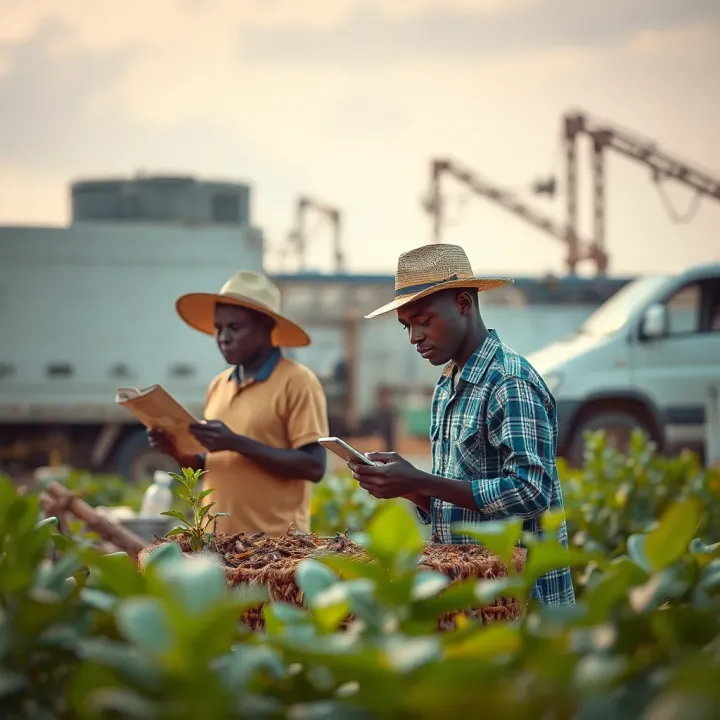
Nigeria's economy doesn't just rely on one sector; it's a mix that creates a unique market environment, requiring a detailed look to grasp its full potential.
By the end, you’ll have a good grasp of how these markets interplay and their significance for anyone dealing with Nigeria’s financial scene—helping you spot profitable ventures or understand policy impacts better.
We’ll keep it straightforward, focusing on practical insights and clear examples rather than buzzwords or fluff. Ready to get a closer look at Nigeria’s vital markets? Let’s dive in.
Understanding the vital markets in Nigeria is essential for anyone looking to grasp how the country’s economic machinery runs. This section lays the groundwork by explaining why these markets matter and what makes them tick. Nigeria, being Africa's most populous nation, hosts a variety of sectors that fuel its economy, each with unique drivers and challenges.
For investors and traders, knowing where the money flows and what sectors dominate can make a big difference in decision-making. For example, many mistakenly view Nigeria solely through the lens of its oil wealth, neglecting the massive role agriculture or telecoms play. This overview highlights such distinctions and sets the tone for more detailed discussions in later sections.
Vital markets aren’t just about numbers; they mirror people's livelihoods, government policies, and global trends all rolled into one.
At its core, a vital market in Nigeria refers to a sector or industry that significantly influences the nation’s economic health and development. These markets bring in substantial revenue, create jobs, and impact other related industries. You can think of them as the joints and cogs in a complex economic system.
Take agriculture, for example — it employs about 70% of Nigerians but often flies under the radar compared to oil. On the other hand, the financial services market, including banks and fintech startups, has grown swiftly, reshaping how people and businesses handle money. These markets are critical not only because of their direct output but also due to their ripple effects on the surrounding economy.
Understanding vital markets helps investors spot opportunities early, policymakers tailor interventions effectively, and businesses align strategies with economic realities. Without this insight, navigating Nigeria’s economy can feel like guessing in the dark.
Nigeria’s key markets didn’t emerge overnight. They evolved alongside historical events, policy shifts, and global influences. The oil market, for instance, exploded in the 1950s after oil was discovered, reshaping the nation’s economy and international standing. This sudden boom, however, led to an overreliance on petroleum exports which exposed Nigeria to global price swings.
Agriculture, once the backbone of the country, has roots tracing back centuries, supporting local communities and trading networks. Markets like Kano and Onitsha thrived as hubs for agricultural produce, crafts, and goods. Over time, they adapted to changing demands and infrastructure improvements.
Meanwhile, the rise of telecommunications from the early 2000s, boosted by players like MTN Nigeria and Airtel, marked a new chapter, connecting millions and sparking innovative business models.
By appreciating this historical context, one can better understand current market dynamics and where future growth might come from. It’s like seeing the blueprint beneath the surface and spotting cracks or potential new pathways.
Agriculture stands as a bedrock of Nigeria's economy, influencing not just GDP figures but the daily lives of millions across the country. It’s more than just farming—it’s a key source of employment, food security, and a stimulus for other industries like processing and export markets. For traders and investors, understanding this sector is crucial because agricultural commodities can directly affect market dynamics and financial stability in Nigeria.
Nigeria's agricultural landscape is diverse, producing staples like cassava, yams, and maize, alongside cash crops such as cocoa, palm oil, and groundnuts. For example, cocoa from southwestern Nigeria is a significant export product, bringing valuable foreign exchange. Palm oil remains a vital commodity, with Nigeria historically competing as one of the top producers globally.
The contribution of these products is twofold: they support local food supply chains and bolster export revenues. Specifically, cassava occupies over 40% of cultivated land in the country, making it a major food staple and a raw material for industries producing flour and starch. The agricultural sector accounts for roughly 20% of Nigeria’s GDP and employs about 70% of the working population, underscoring its economic weight.
Despite its potential, Nigerian agriculture wrestles with several persistent issues. One big hurdle is limited access to modern farming equipment and technology. Many farmers still rely on traditional methods, leading to low yields. Inadequate infrastructure, such as poor rural roads and storage facilities, causes high post-harvest losses.
Access to financing remains tight—banks are often hesitant to lend to rural farmers due to perceived risks, which stifles expansion efforts. Additionally, fluctuating weather patterns linked to climate change have made farming less predictable, further jeopardizing yields. Without addressing these hurdles, the sector risks falling short of its full potential.
There’s a bright side, though. Innovations like mobile-based agritech solutions are gaining momentum in Nigeria. Platforms such as Farmcrowdy connect small farmers to funding and provide agricultural information, helping improve output. Also, initiatives focused on mechanizing farming through affordable equipment leases are gradually changing the game for many local farmers.
Expanding agro-processing initiatives offers big promise, too. Instead of just exporting raw products, Nigeria has the chance to add value by producing finished goods locally—think packaged foods or biofuels. This not only opens more jobs but also diversifies export markets.
For investors and traders, these shifts mean there are new, less explored ways to engage with agriculture—from financing innovations to supply chain improvements. Paying attention to these developments might just be the key to catching growth before it makes headlines.
In summary, agriculture’s role in Nigeria goes beyond just planting and harvesting; it underpins economic health and holds untapped potential. Understanding its nuances offers a clearer picture of the country’s broader economic outlook and investment possibilities.
Nigeria's economy has long been synonymous with oil and gas. This sector remains at the heart of the national income and foreign exchange earnings, making it a backbone for government budgets and the broader economy. Understanding the role of oil and gas is essential because it shapes policy decisions, investment directions, and employment opportunities. For traders and investors, this market is where global price fluctuations meet local realities, creating both opportunities and risks. The practical benefits include substantial revenue inflows and job creation, but there are also challenges tied to market instability and overdependence.
Oil and gas exports have been the lion's share of Nigeria's foreign earnings for decades. As Africa's largest oil producer, Nigeria exports crude oil mainly to Europe, India, and the United States. The government heavily relies on export revenues from companies like the Nigerian National Petroleum Corporation (NNPC), Shell, and ExxonMobil to fund infrastructure projects and public services. For example, in 2023, oil exports accounted for roughly 90% of Nigeria’s total export revenue, underscoring how vital this sector is.
However, heavy reliance on oil-export earnings means the country’s economic health often mirrors global oil price swings. A drop in crude prices hitting below $50 per barrel can tighten government budgets, delay payments, and weaken the naira. Conversely, price spikes can boost reserves and investor confidence. This direct link shows why oil and gas exports aren't just about sales but about the overall economic pulse.
The oil market’s volatility is no stranger to Nigeria. Political instability in the Niger Delta, periodic pipeline vandalism, and production disruptions add local risks to international price swings caused by OPEC decisions and geopolitical events.
For instance, the 2020 oil price crash when demand plummeted due to COVID-19 exposed just how vulnerable Nigeria's economy is to global shocks. Revenue losses led to fiscal deficits and forced the government to dip into foreign reserves. Investors need to watch risks like production stoppages and regulatory shifts, which can surprise the market and cause rapid price changes.
Moreover, oil and gas investments require significant upfront capital with long payback periods, so volatility can scare off potential investors. That’s why market players keep a close eye on stability efforts and contingency plans while trading or investing.
Recognizing the risks of relying solely on oil, Nigeria has launched efforts to broaden its economic base. The "Economic Recovery and Growth Plan" and initiatives by the Central Bank focus on boosting agriculture, manufacturing, and technology sectors to generate new export streams and jobs.
There are real strides in natural gas development, which has vast untapped reserves estimated around 5.3 trillion cubic meters. Projects like the Dangote Refinery aim to reduce crude oil swaps, refine locally, and create fuel security. Also, Nigeria’s participation in the African Continental Free Trade Area (AfCFTA) is expected to open doors for other sectors beyond oil, increasing trade and investment in diverse markets.
While oil and gas still dominate Nigeria's economy, understanding the nuances of its volatility and diversification moves helps traders and investors make smarter decisions. Staying alert to policy changes and global market trends is essential.
In a nutshell, the oil and gas market remains a giant but unpredictable player. For anyone involved with Nigeria’s economy, balancing this sector's promise with its pitfalls is key to tapping opportunities while managing risks.
The financial services market stands as a backbone for Nigeria’s economic growth, linking investors, businesses, and consumers. This sector not only facilitates the flow of capital but also drives innovation and economic inclusion, which is vital for a country with a rapidly expanding population and entrepreneur base. Understanding Nigeria’s financial landscape helps investors and traders identify opportunities, manage risks, and appreciate the forces shaping the broader economy.
Nigeria's financial services ecosystem features a blend of longstanding banks, insurance companies, microfinance institutions, and emerging fintech firms. Prominent banks such as Access Bank, Zenith Bank, and Guaranty Trust Bank play fundamental roles in capital mobilization and lending. Alongside these, the Nigerian Stock Exchange provides a platform for equity trading and capital raising, supporting corporate growth and investor participation.
Multiple microfinance banks contribute by offering financial access to underserved populations, especially in rural areas. Insurance providers like AIICO and Leadway Assurance help mitigate risks for businesses and individuals alike. Together, these players form a layered market structure that ranges from traditional financial institutions to innovative startups, each with specialized roles impacting liquidity and economic activity.
The past few years have seen Nigeria emerging as a fintech hotspot, driven by a youthful, tech-savvy population demanding better financial access. Companies like Flutterwave, Paystack, and Interswitch are redefining payments and financial services through mobile wallets, online payment gateways, and instant money transfers.

Digital banking platforms, such as Kuda and Carbon, are popular for their user-friendly interfaces and low fees, attracting millions of Nigerians who previously found banking services inaccessible or cumbersome. These platforms not only facilitate day-to-day transactions but also help boost savings and credit access for small businesses in an efficient and scalable way.
This surge in fintech adoption is reshaping how financial services are delivered, promoting inclusion across demographics and geographical boundaries, and increasing overall financial activity within the country.
Regulation plays a critical role in balancing innovation with stability in Nigeria's financial sector. The Central Bank of Nigeria (CBN) and the Securities and Exchange Commission (SEC) are key regulators overseeing banks, capital markets, and fintech companies. For instance, the CBN's regulatory sandbox supports innovation while mitigating risks tied to new technologies.
However, challenges persist. Regulators must address issues like cybersecurity threats, fraud, and money laundering, which have increased alongside digital financial services. Moreover, inconsistent policies, such as sudden restrictions on cryptocurrency trading, can create uncertainties that investors and businesses must navigate cautiously.
Despite these hurdles, ongoing reforms and stakeholder engagements aim to foster a more resilient and transparent financial ecosystem that can support Nigeria's economic ambitions.
Investors and traders interested in Nigeria's financial services market must keep a keen eye on regulatory developments, ensure compliance, and be ready to adapt strategies amid an evolving landscape. Understanding the dynamics between traditional players and the fintech wave is essential for leveraging opportunities while managing inherent sector risks.
Technology and telecommunications have become real game changers in Nigeria's economy. They not only connect people but also open doors for businesses to innovate and expand. This sector is especially important for traders, investors, and financial analysts because it drives access to markets and information, which are key for making sound decisions and spotting opportunities.
Nigeria’s telecom infrastructure has seen rapid development over the past decade, with companies like MTN Nigeria, Airtel, and Glo leading the charge. The expansion of 4G networks has boosted internet penetration, reaching over 50% of the population as per recent reports by the Nigerian Communications Commission (NCC). This growth has made mobile internet affordable and widely accessible, empowering small businesses and individuals alike.
However, rural areas still lag on connectivity, with several communities facing poor signal quality or lack of coverage altogether. Still, infrastructure projects and investments are ongoing, with firms exploring 5G deployment to improve speed and reliability. For investors, knowing where these advancements are happening can spot promising niches and partnerships.
Nigeria’s tech scene, especially in Lagos and Abuja, buzzes with innovation hubs like the Co-Creation Hub (CcHub), Yaba Tech Hub, and Ventures Platform. These centers nurture startups focusing on fintech, agritech, healthtech, and e-commerce. Companies like Flutterwave and Paystack started here, scaling from humble beginnings to global players.
These innovation ecosystems attract local and international investments, creating a fertile ground for new ideas that solve local problems. For traders and financial analysts, this means fresh opportunities to spot disruptive technologies and emerging markets early in their life cycle.
Despite progress, significant challenges remain. About 40% of Nigerians lack reliable internet access, mainly due to poor infrastructure in remote regions. The high cost of data, inconsistent electricity supply, and low digital literacy skills also slow digital inclusion.
Addressing these gaps is critical because digital exclusion limits who can participate in the modern economy. Policymakers and companies need to collaborate to lower barriers, for instance, by subsidizing data costs or investing in renewable energy to power telecom towers. Without tackling these issues, the full potential of Nigeria’s technology and telecommunications market can't be realized.
Strong telecom infrastructure and a vibrant startup culture are setting the stage for Nigeria's economic acceleration. But bridging the digital divide remains one of the top tasks to ensure this growth benefits everyone.
In summary, the technology and telecommunications market in Nigeria is growing fast but unevenly. Smart investments and strategic partnerships focusing on expanding rural coverage and supporting innovation hubs will be key for sustaining this momentum. For investors and market players, understanding these dynamics can offer a leg up in a highly promising yet competitive field.
The consumer goods and retail sector is a vital piece in Nigeria's economic puzzle, impacting everyday life and business landscapes alike. This sector reflects shifts in income, taste, and consumption patterns, playing a major role in driving domestic demand. For traders and investors, understanding this market's pulse offers a direct line to consumer confidence and spending behaviors, crucial for informed decision-making.
When it comes to popular goods, Nigeria's market has a strong appetite for fast-moving consumer goods (FMCGs), including products like Indomie noodles, Peak milk, and Haleeb milk. These brands have become household staples across urban and rural areas, thanks to their affordability and easy availability. Beyond food, consumer electronics like smartphones—brands such as Tecno, Infinix, and Samsung—are in high demand as the population's tech-savviness grows.
Retail trends also show an acceleration in e-commerce platforms such as Jumia and Konga, which have surged in popularity due to convenience and expanding internet access. Another trend is the increasing interest in locally-made goods, including fashion and skincare, driven by organizations promoting "Made in Nigeria" products. This shift not only fuels domestic manufacturing but appeals to the rising middle class looking to support local businesses.
The rapid urbanization in cities like Lagos, Abuja, and Port Harcourt shapes Nigeria's retail market significantly. As more people move into urban centers, their consumption patterns evolve—there's a tilt towards convenience, variety, and brand consciousness. The average city dweller is more likely to shop at malls or online, favoring branded packaged foods and premium products.
Moreover, younger generations in urban Nigeria tend to place importance on quality and style, alongside price. This changes how retailers position their products and adjust inventory to cater for this demographic. Social media also plays an outsized role in influencing purchasing decisions, fueling trends that spread faster than ever.
Investors should note that understanding urban consumers' preferences and the shift in shopping channels is key to capturing growth in the consumer goods space.
In summary, the interplay between popular consumer products and shifting urban lifestyles crafts a dynamic and evolving retail environment. This presents ample opportunities for savvy investors and traders who stay close to market changes and consumer signals.
The real estate and construction sector in Nigeria plays a vital role in bolstering the country’s economy, especially as urbanization and population growth continue to soar. This market not only provides housing and commercial spaces but also stimulates employment and attracts investments from both local and foreign stakeholders. For traders, financial analysts, and investors, understanding the real estate market’s outlook is essential because it reflects broader economic health and potential for capital growth within Nigeria.
Several factors are steering the demand for real estate in Nigeria. First and foremost is rapid urbanization. Cities like Lagos, Abuja, and Port Harcourt have witnessed exponential population increases, pushing the need for residential and commercial properties. For instance, Lagos’s informal settlements highlight tremendous housing shortages, creating both challenges and opportunities for developers.
Another key driver is Nigeria's expanding middle class with increased disposable income. This group’s preference for modern housing and retail spaces adds fresh momentum to real estate demand. Additionally, businesses expanding their footprint, particularly in sectors like banking and telecommunications, require office spaces, further fueling demand.
Remittances from Nigerians abroad also contribute significantly, with many investing in properties back home. This inflow of funds often finances residential projects in emerging neighborhoods. However, rising construction costs and inconsistent electricity supply sometimes slow growth, illustrating the delicate balance in the market.
Infrastructure development directly impacts the real estate sector’s viability. Roads, power supply, water systems, and transport links are the lifeblood of any flourishing property market. In recent years, government initiatives aiming to improve road networks and energy availability have generated more interest from investors. For example, the completion of projects like the Lekki-Epe Expressway upgrade has opened new frontiers for residential and commercial development in Lagos.
On the policy front, the Nigerian government has introduced several measures to stimulate real estate growth. The Federal Mortgage Bank of Nigeria (FMBN) has been working on increasing access to affordable housing loans, though accessibility remains an issue for many. Also, policies encouraging public-private partnerships aim to boost infrastructure that supports housing projects.
Regulatory frameworks around land ownership and title documentation continue to be hurdles, often delaying development and resource allocation. Efforts to digitize land registries could ease transactions and build investor confidence if fully implemented. Additionally, tax incentives for developers working in affordable housing segments have begun to emerge, a positive sign for those looking long-term.
In essence, while demand for Nigerian real estate is robust and growing, it rides on infrastructure quality and sound government policies — a landscape worth watching closely by market participants.
Understanding these factors equips investors and traders to make smart moves in Nigeria’s real estate and construction market, avoiding pitfalls while capitalizing on clear growth signals.
Nigeria's economy has long been perceived as heavily dependent on oil exports, but the significance of diversifying export markets beyond oil cannot be overstated. Expanding into alternative export sectors is critical for reducing economic vulnerability and tapping into new revenue sources. This shift also helps cushion the impact of volatile global oil prices on Nigeria’s overall economic health.
One major benefit of broadening export markets is creating more resilient economic growth paths. By boosting exports in agriculture, manufacturing, and industrial goods, Nigeria can increase foreign exchange earnings and provide employment in diverse sectors. For investors and traders, understanding these alternative markets opens doors to emerging opportunities beyond the traditional hydrocarbon sphere.
Nigeria’s agricultural exports have steadily gained traction on the global stage due to the country’s rich natural resources and favourable climate. Key agricultural products such as cocoa, sesame seeds, cashew nuts, and kola nuts fetch attention in markets like Europe, Asia, and the Americas.
Cocoa, for example, is one of Nigeria’s top non-oil export earners. Nigerian cocoa beans are prized for their quality in chocolate manufacturing supply chains. While countries like Ivory Coast and Ghana dominate the cocoa export market, Nigeria offers a distinctive niche with its unique flavor profiles.
Farmers and exporters face challenges like poor infrastructure and quality control inconsistencies, but targeted investment is slowly improving export potential. Initiatives encouraging better post-harvest handling and certification help Nigerian agricultural exports meet international standards.
By capitalizing on global demand for organic and fair-trade agricultural products, Nigerian producers can carve out competitive advantages. For instance:
Sesame seeds: High demand in Japan and Middle East markets benefits Nigerian exporters.
Cashew nuts: Increasing exports to India and Vietnam fuel this emerging market.
Increasing access to global agricultural fairs and strengthening export credit facilities would further boost this sector's contribution.
Nigeria’s manufacturing exports remain an underexploited but promising avenue for economic expansion. The country produces a wide range of products including textiles, chemicals, cement, processed foods, and light machinery.
One interesting example is the burgeoning textile industry in cities like Kano and Lagos, where locally woven fabrics cater to both domestic and diaspora markets. Nigerian textiles tell a story of cultural heritage combined with modern design, appealing to buyers in Europe and North America.
Processed foods such as canned tomatoes, processed palm oil, and snacks also gain traction within African regional markets and beyond. Industrial goods like cement and steel have potential but require scaling up production and improving quality to compete internationally.
Exporters face hurdles like power supply issues, high production costs, and regulatory bottlenecks. Yet, programs coordinated by the Nigerian Export Promotion Council (NEPC) and partnerships with private sectors are helping manufacturers meet export requirements.
Diversifying Nigeria's export basket is no longer optional but necessary. Expanding manufacturing and agricultural exports can help stabilize foreign earnings and create jobs amid fluctuating oil revenues.
For traders and investors, exploring these alternate markets means tapping into sectors poised for steady growth with government backing. Investors can look at:
Infrastructure support projects for export-oriented factories
Supply chain improvements in rural agricultural hubs
Export finance schemes targeting small and medium enterprises (SMEs)
In summary, beyond oil, Nigerian exports in agriculture and manufacturing hold significant untapped potential. Through focused investment, improved policies, and stronger global linkages, these sectors can add new dimensions to Nigeria’s economic profile and offer fresh chances for business participants.
Informal markets form the backbone of much of Nigeria’s economic activity, especially for a large chunk of the population that may not have access to formal employment. Their importance extends beyond just small-scale trade; these markets offer livelihoods, foster entrepreneurship, and drive local economies in ways that often go unnoticed by official data. Understanding this sector is key for anyone interested in Nigeria’s economy because it paints a fuller picture of how wealth and jobs are distributed across the population.
Informal trading in Nigeria is massive, employing an estimated 65-70% of the workforce, according to the National Bureau of Statistics. You'll find it everywhere—from the bustling open-air markets of Lagos to the roadside stalls in Kano. This sector is marked by a lack of formal registration, minimal compliance with tax laws, and limited access to credit or business support services. Traders often work in businesses like street vending, small-scale farming, tailoring, and artisan crafts.
These markets thrive on flexibility. For example, many vendors operate without fixed storefronts, moving goods from place to place, which allows them to adapt quickly to demand shifts or enforcement crackdowns. Despite its informal nature, this sector is tightly woven into Nigeria’s supply chains, especially for essential goods like foodstuff, clothing, and household items.
The informal sector is no small fry—it covers a broader range of economic activities than just an overflow from formal market failures.
Efforts to regulate and formalize Nigeria’s informal markets have met with mixed results. On one hand, incorporating traders into the formal economy could increase tax revenues and improve social protections for these workers. On the other, heavy-handed regulation risks pushing traders further into the shadows, hurting livelihoods.
Programs like the National Social Safety Nets Project have tried giving informal workers access to benefits such as pensions and healthcare by encouraging registration. Meanwhile, Lagos State introduced vendor identification programs to formalize street trading, which included issuing licenses and designated trading zones.
However, challenges remain, such as distrust of government agencies and the cost of compliance, which are often prohibitive for small traders. A balanced approach that supports informal traders with training, microcredit, and market access—while gradually integrating them into formal systems—is crucial.
Policymaking must strike a fine balance between enforcement and support to avoid strangling informal traders who fuel a big slice of Nigeria’s economy.
Understanding the informal market’s scale and the nuances of regulation gives traders, investors, and policy analysts a clearer lens through which to view Nigeria’s economic landscape. It’s not just about numbers; it’s about real people and businesses navigating complex realities, adapting, and contributing to the nation’s growth every day.
Trade partnerships and regional market integration play a significant role in shaping Nigeria’s economy. By aligning with neighboring countries and regional blocs, Nigeria opens doors to larger markets, reduces trade barriers, and attracts investment. This interconnected approach helps diversify the economy, lessen reliance on oil, and foster sustainable growth.
The practical benefits go beyond mere trade volume growth. Integrated markets promote shared infrastructure projects, coordinated policies, and streamlined customs procedures. For instance, Nigeria's involvement in regional transport corridors smooths the flow of goods not only within its borders but across West Africa. This connectivity encourages businesses to scale up and innovate, knowing they can tap into a wider customer base.
However, effective integration requires addressing challenges like infrastructural gaps, inconsistent regulations, and political differences among member countries. For investors and traders, understanding these complexities is key to navigating the regional trade landscape intelligently.
The Economic Community of West African States (ECOWAS) and the African Continental Free Trade Area (AfCFTA) are cornerstone frameworks driving regional trade integration for Nigeria.
ECOWAS, since its inception, has aimed to create a single regional market for goods and services in West Africa. Nigeria, as the largest economy in the bloc, plays a pivotal role here. The ECOWAS Trade Liberalization Scheme (ETLS) allows Nigerian products to move tariff-free across member states, boosting exports like fabricated steel products and agricultural goods.
AfCFTA expands this vision across the entire continent, aspiring to build the world's largest free-trade area. For Nigerian businesses, AfCFTA offers expanded market access to over 1.2 billion people, easing previous barriers and encouraging cross-border partnerships beyond West Africa.
These agreements are not without hiccups. Issues such as varying customs procedures and non-tariff barriers often slow down trade despite formal agreements. Yet, progress is steady, with both ECOWAS and AfCFTA continually working on harmonizing policies.
Traders and investors should keep a close eye on ECOWAS and AfCFTA developments, as strategic participation can unlock new opportunities in emerging markets across Africa.
Nigeria stands as a trade giant within West Africa, thanks to its vast economy and population. It acts as a major supplier and consumer in the regional trade networks, linking both formal and informal markets.
Its strategic geographical location, coupled with ports like Apapa and Lekki, makes Nigeria a key transit hub for goods moving into neighboring countries like Niger, Chad, and Benin. This transit trade, however, faces challenges such as congestion at ports and road infrastructure decay, impacting the speed and cost of goods movement.
Moreover, Nigerian traders often rely on informal routes and markets, which, while flexible and accessible, sometimes evade regulation and tax revenues. Understanding these dynamics is vital for businesses trying to integrate fully into the regional economy.
Efforts to improve border management and reduce bureaucratic delays, through technology and policy reforms, aim to make Nigeria’s position more competitive. Investors who grasp the nuances of these networks—formal and informal—can better strategize entry points and partnership channels.
In summary, Nigeria's active role in West African trade networks, supported by ECOWAS and AfCFTA cooperation, is a vital factor driving its economic expansion. Yet, the nuanced challenges of infrastructure and regulatory alignment remain areas to watch for stakeholders.
Looking ahead, understanding where Nigeria's vital markets are shifting is more than just an academic exercise—it's a must for anyone serious about business or investment in the country. Markets don’t stay still, and with Nigeria's unique economic conditions, shifts can be swift and surprising. Focusing on future perspectives helps traders and investors stay ahead of the curve, spotting trends before they become mainstream and understanding how regulatory or technological changes might impact sectors.
Nigeria is at a crossroads economically, juggling traditional markets like oil and agriculture with emerging sectors ready to take the spotlight. For instance, fintech startups such as Flutterwave and Paystack show how technology is reshaping the financial landscape, offering better, cheaper access to banking for millions. Keeping an eye on these shifts helps in allocating resources smartly.
"Information is the coin of the realm in investment, especially in a market like Nigeria’s, where change is the only constant."
Among Nigeria’s promising markets, a few stand out as key drivers for the future. The renewable energy sector is rapidly gaining traction, particularly solar power. Given Nigeria’s frequent power shortages, businesses like Lumos and Arnergy are tapping into a huge need for off-grid energy solutions. This isn’t just about green energy; it’s a practical answer to a long-standing problem.
Another sector worth noting is agritech, which merges technology with agriculture to enhance productivity and market access. For example, Farmcrowdy connects farmers directly with investors, improving both yield and income. This kind of innovation could transform rural economies and reduce dependence on oil.
Healthcare technology also deserves attention. With a growing population and evolving health needs, companies investing in telemedicine and mobile health apps are making healthcare more accessible. Startup firms like Helium Health are helping digitize patient records and streamline hospital management, illustrating how technology is addressing gaps in Nigeria’s healthcare infrastructure.
Economic reforms can make or break market growth. For Nigeria, reforms aimed at improving ease of doing business are critical. The government’s recent moves to cut red tape, simplify tax regimes, and improve customs processes can lower barriers for both local and foreign investors.
One reform with a lot of buzz is the push to diversify the economy beyond oil. Policies encouraging manufacturing, tech innovation, and agriculture create new opportunities. For example, the Nigerian Export Promotion Council’s efforts to boost non-oil exports have helped unlock markets for local products like cocoa, sesame seeds, and textiles.
Additionally, financial sector reforms focusing on fintech regulation promise to stabilize and expand digital financial services. Clearer regulations can encourage more startups to innovate without fear of sudden shutdowns.
Key considerations for investors:
Monitor government announcements for regulatory changes
Assess how reforms impact supply chains and consumer markets
Be aware of how infrastructure development projects can open new markets
Nigeria's markets are evolving, and the future will likely belong to those who anticipate changes early and adapt fast. By watching emerging sectors and following economic reforms, traders and investors can position themselves to benefit as Nigeria’s economy continues to grow and change.
📈 Explore XAUUSD price dynamics, key influences, market trends, trading strategies & risks tied to gold value in USD – essential for traders and investors.
Discover Nigeria's top forex traders 💰, learn the key traits for success and challenges faced 🇳🇬, plus tips for trading safely and smartly 📊.

📈 Learn to spot 7 key chart patterns like head & shoulders, triangles, and flags. Boost your trading skills with practical tips for smarter market moves.

📉 Explore what drives USD/JPY moves—from economic indicators and policies to geopolitics and charts. Get insights to navigate this key currency pair confidently.
Based on 5 reviews