
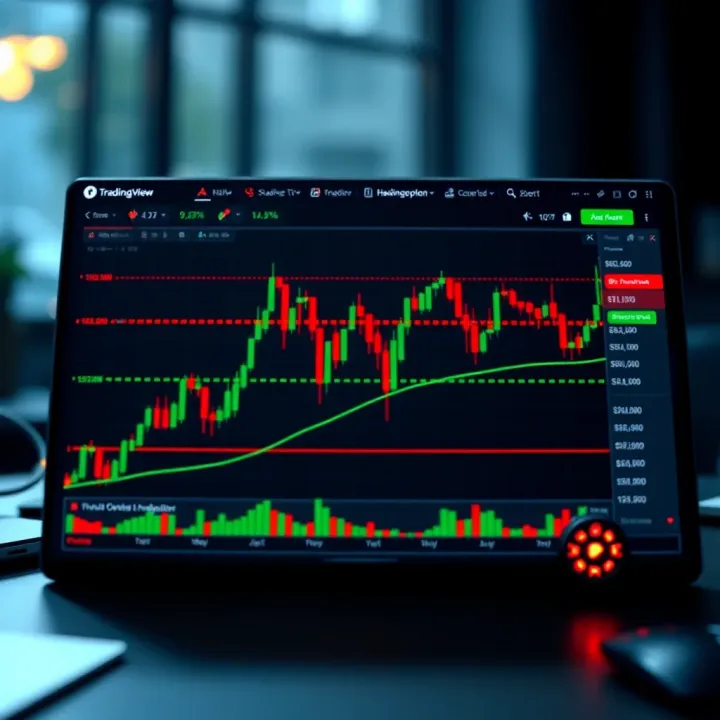
How to Use TradingView for Binary Options Trading
Boost your binary options trading in Nigeria with TradingView! 📈 Learn setup, key features & tips to improve your strategies effectively.
Edited By
Sophie Anderson
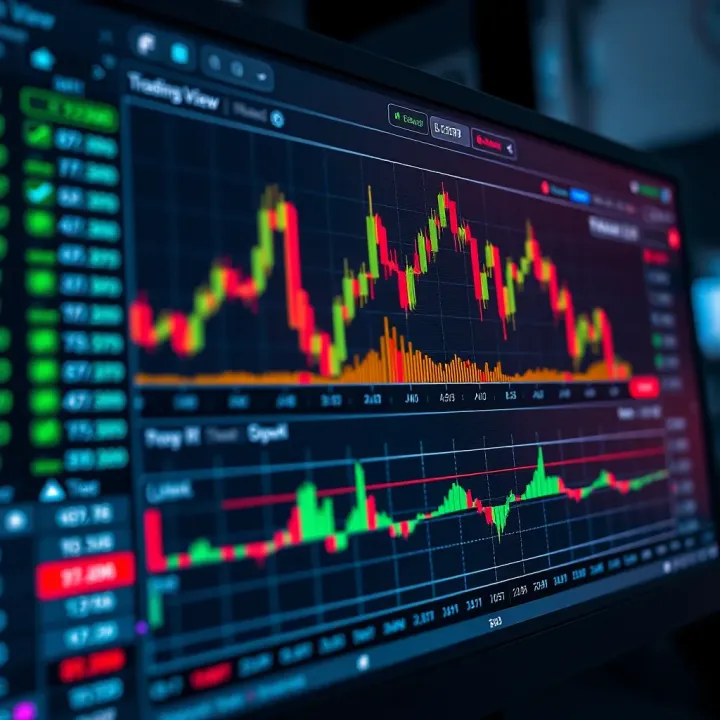
TradingView has become a go-to platform for traders worldwide because of its detailed charts, vast libraries of technical indicators, and real-time market data. For Nigerian binary options traders, understanding how to use TradingView can significantly sharpen decision-making. Instead of relying on guesswork or hearsay, you get clear, visual insight into price movements that can influence when and where you place trades.
Binary options trading requires swift decisions based on short-term market trends. TradingView helps by offering a simple interface where you can customise your charts to fit your trading style. Whether you deal in forex, stocks, commodities, or crypto, the platform supports multiple asset classes relevant to the Nigerian market.
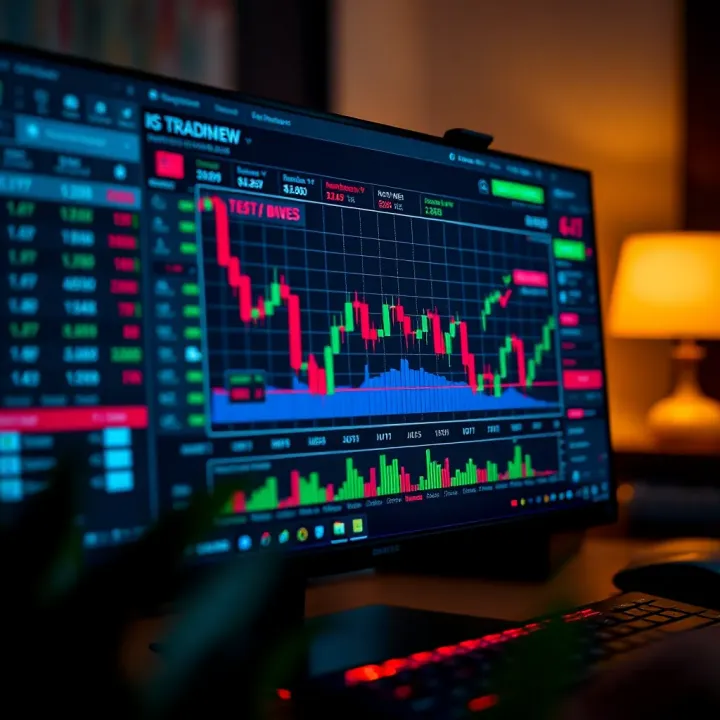
Using TradingView’s charting tools allows you to spot entry and exit points more reliably, which is critical in the fast-paced binary options market.
To start, you set up customised charts with specific timeframes—from one minute to hourly intervals—matching your trading timeframe. Traders in Lagos dealing with rapid price moves during market hours benefit from setting short timeframes like 5 or 15 minutes. Meanwhile, those scanning market trends before placing trades can use longer intervals.
The platform also enables layering of technical indicators like Moving Averages (MA), Relative Strength Index (RSI), and Bollinger Bands. These tools help identify trends, overbought or oversold conditions, and volatility, which are crucial signals when timing binary option contracts.
Additionally, TradingView includes social features where Nigerian traders share chart setups and strategies. This peer insight can uncover nuances specific to the Nigerian economy or regional stocks listed on the Nigerian Exchange (NGX).
In this article, we will walk through harnessing these features to improve your binary options outcomes. You’ll learn setup tips, indicator choices, and how to integrate TradingView chart signals with your binary options trading platform to make informed trades. We will also cover the limits of relying solely on technical charts, especially given market unpredictability in Nigeria.
Understanding TradingView well will give you a vital edge—not just by showing you where prices are going, but by helping you manage risk and avoid avoidable mistakes. So, whether you trade from your laptop in Abuja or on your phone in Port Harcourt, mastering TradingView’s tools is a wise step.
Understanding TradingView and binary options is foundational for any Nigerian trader aiming to improve results. TradingView provides the technical tools to analyse price movements accurately, while binary options offer a straightforward way to profit from market direction without owning the underlying assets. Grasping both helps traders make smarter decisions in Nigeria’s often volatile markets.
TradingView is an online platform known for its highly customisable charts and a wide array of technical indicators. Its simple interface allows users to plot price movements for various assets like stocks, forex, cryptocurrencies, and commodities. For Nigerian traders, this means easy access to detailed charts without needing expensive software.
The platform also supports social features where traders can share ideas and strategies, which adds community value. Many Nigerians have made TradingView their go-to tool because it fits well even on mobile devices, making it convenient for those trading amidst power and internet fluctuations.
TradingView’s popularity in Nigeria grew as more traders sought reliable charting solutions beyond local trading platforms. Its free tier offers enough features for beginners, while premium plans unlock advanced tools.
In Lagos or Abuja, traders often use TradingView during market hours to track the NSE All-Share Index or currency pairs like USD/NGN. It helps them spot entry and exit points quickly, especially in binary options where timing counts. The platform’s ability to run on low bandwidth is a particular plus, given Nigeria’s connectivity challenges.
Binary options simplify trading by offering a yes/no proposition: will an asset rise above or fall below a price at a set time? If your prediction is correct, you get a fixed payout; if wrong, you lose the invested amount. This predictability appeals to Nigerian traders who prefer clear risk-return setups over complex positions.
Binary options do not involve ownership of the asset, so you don’t worry about dividends or interest rates. Your focus is solely on price direction within short timeframes, often minutes or hours.
In Nigeria, binary options are mostly offered through online brokers accessible via smartphones or laptops. Traders deposit funds in naira or USD and choose assets ranging from forex pairs to commodities like crude oil.
Because of regulatory grey areas, Nigerians must be cautious about broker credibility to avoid scams. Nonetheless, many use signals from charting platforms like TradingView to improve their chance of success. For example, a trader might use RSI levels on TradingView to anticipate an asset's movement before placing a binary option trade with a Nigerian broker.
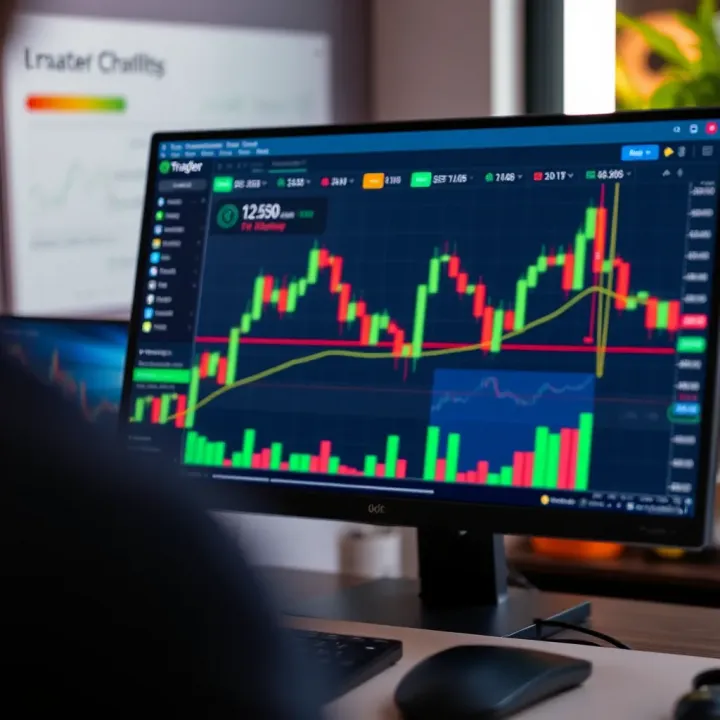
Using TradingView alongside careful binary options trading can improve your strategy, but always verify brokers and understand risks before investing.
Setting up TradingView correctly is a key step for traders in Nigeria who want to harness its full potential for binary options analysis. The platform’s advanced charting tools and real-time data only become truly useful when the interface is personalised to suit the fast-paced, short-term nature of binary trading. Proper setup ensures quick access to relevant information and reduces the risk of missing crucial market moves.
Signing up on TradingView is straightforward and free, which makes it accessible for Nigerian traders operating with limited budgets. Simply visit the website, enter an email address, and pick a username and password. This quick signup unlocks essential features like saving customised charts and setting up alerts—tools that are vital for timely binary options trading decisions. Without an account, traders face restrictions that can hinder effective analysis.
Once logged in, navigating the dashboard becomes your next task. The dashboard serves as the launching pad where you access charts, watchlists, news, and notifications. Key areas include the charting panel, where you apply indicators and draw tools, and the watchlist, which lets you track assets such as forex pairs and commodities popular among Nigerian traders. For example, you might add USD/NGN or crude oil to your watchlist, staying alert to price changes that impact binary trading opportunities. Mastering these basic dashboard functions avoids delays and allows quick response to market shifts.
Choosing the right assets relevant to Nigerian traders is crucial since not all markets behave the same. Given Nigeria’s economic exposure, forex pairs involving the naira (like USD/NGN, EUR/USD) and commodities such as crude oil and gold hold particular interest. On TradingView, you can search and add these assets to your charts, ensuring you monitor the markets with the most impact on local trading conditions. This targeted approach streamlines analysis and boosts the chance of making informed trades.
Timeframes play a significant role in binary options, where trades often last just minutes or hours. For this reason, selecting suitable timeframes like 1-minute, 5-minute, or 15-minute charts is essential. TradingView allows easy switching between time intervals, helping you capture quick price movements typical in binary options. For instance, using a 5-minute chart, you can spot momentary trends that guide entry and exit points, which is crucial when trades expire within short periods. Avoid wasting time on longer timeframes that don’t align with binary trading strategies.
Setting up your TradingView account and personalising charts with relevant assets and timeframes will improve your trading accuracy and speed, essential for succeeding in Nigeria’s often volatile binary options market.
Understanding and applying these setup steps lays the foundation to make better use of TradingView’s powerful features as you progress in binary options trading.
Technical tools on TradingView are essential for traders, especially those involved in binary options in Nigeria. These tools help in making informed decisions by analysing price movements and market trends sharply. In binary options trading, where decisions hinge on whether prices will rise or fall within a short period, precise technical analysis becomes even more valuable.
Moving averages smooth out price data to identify trends over set periods. Nigerian traders often use simple moving averages (SMA) or exponential moving averages (EMA) on TradingView to spot buying or selling signals quickly. For instance, if a short-term moving average crosses above a long-term one, it may signal an upward trend, suggesting you consider a 'call' option. Conversely, a downward crossover could hint at a 'put' option. This indicator reduces noise and clarifies trend direction, which is important when binary options expiry times are short.
Relative Strength Index (RSI) measures the speed and change of price movements on a scale from 0 to 100. RSI values below 30 often indicate that an asset is oversold, while values above 70 suggest it is overbought. Nigerian traders use this to time their entries and exits on binary options. For example, an oversold RSI for an asset like the NGX index might suggest a good time to bet on a price increase, especially if confirmed by other signals. RSI helps avoid buying at a peak or selling at a bottom.
Bollinger Bands use standard deviations to plot upper and lower bands around a moving average, forming a price envelope. When prices touch the upper band, the asset might be overbought; when prices approach the lower band, it may be oversold. In binary options, this signals potential price reversals. For example, if the price of a naira/USD forex pair hits the lower band and bounces back, that could indicate a call option opportunity. These bands adapt to volatility, which is useful in Nigeria’s sometimes unstable forex market.
Trendlines and support/resistance levels are simple but powerful for spotting key price points. Traders draw trendlines by connecting highs or lows on TradingView charts to show the direction of the market. Support levels indicate where prices usually stop falling, while resistance shows where prices struggle to rise beyond. In binary options, entering trades near these levels offers a clearer edge. For example, if the price nears a strong support level on the NSE 30 Index, odds are it will bounce back, making it a sensible point to consider a call option.
Fibonacci retracements use horizontal lines to indicate areas where price might reverse by marking key percentages of a previous move. Typical retracements at 38.2%, 50%, and 61.8% are watched closely. Nigerian traders use this to gauge entry points when the price corrects in the middle of a trend. Say an asset on TradingView, like the price of crude oil (a key indicator for Nigeria’s economy), pulls back to the 50% Fibonacci level during an upward trend — that’s often a good signal to place a binary options call.
Using these technical tools effectively on TradingView can sharpen your binary options strategy by identifying key moments to enter or exit trades. While no tool guarantees wins, combining indicators and drawing methods enhances your chances of making smart trades in Nigeria’s dynamic markets.
TradingView signals simplify the decision-making process in binary options trading by highlighting potential market entry and exit points. For Nigerian traders, leveraging these signals can boost chances of profit by reducing the guesswork involved in predicting short-term price movements. Still, it’s vital to understand how these signals work and their practical application within Nigeria’s unique market conditions.
Built-in alerts and community strategies come pre-loaded on TradingView and are invaluable for keeping traders informed in real-time. These include alerts triggered by price actions, indicator crossovers, or custom conditions created by the platform’s community. For example, a trader watching oil prices—which heavily impact the Nigerian economy—can set an alert for when crude oil breaks a critical resistance level. These signals help Nigerian traders react swiftly, avoiding the need to stare at charts all day.
Community strategies allow traders to tap into collective wisdom. Many Nigerian traders share their own scripts and strategies publicly, providing options for users to explore what works best locally. While these strategies are not foolproof, they offer fresh perspectives and can be a starting point for customised trading approaches.
Setting up custom alerts is essential for traders who want signals tailored to their styles or specific assets. On TradingView, you can configure alerts based on a variety of conditions, like when the RSI drops below 30, indicating oversold conditions—potentially a good time to buy. These alerts can be sent via email, SMS, or app notifications, so you stay updated even during Nigeria’s frequent power outages or patchy internet connections.
Custom alerts also let Nigerian binary options traders focus on assets relevant to their interests, such as NGX-listed stocks or currency pairs like USD/NGN. For instance, an alert can be set to notify when the naira’s exchange rate crosses a threshold, helping traders react to forex market swings.
Manual signal trade execution remains the common method for trading binary options in Nigeria. After receiving a signal on TradingView, traders manually enter trades on their chosen binary options platform. This keeps users fully in control, allowing them to weigh market news or local factors—like fuel price changes or political events—before committing funds.
Manual execution can be inconvenient but it often means more careful decisions. For example, during the 2023 naira depreciation, traders who relied solely on automated signals sometimes lost out, while those who manually considered local events adjusted their trades accordingly.
Limitations of automation in Nigeria restrict full integration between TradingView signals and trading bots. Unlike some global markets, Nigerian binary options brokers rarely support direct API connections or automated trade placement from TradingView. This gap is mainly due to regulatory uncertainties and broker capabilities.
Automation might sound like a dream, but in Nigeria, it raises risks of errors, scams, and oversight challenges. Traders must be cautious because many automated binary options services with grand promises turn out to be fraudulent or unreliable. For now, Nigerian traders benefit more from mastering manual trade execution assisted by TradingView’s rich signal features.
Practising patience and combining TradingView signals with local market insight remains the safest approach for Nigerian binary options traders, especially given market volatility and broker limitations.
By understanding and carefully using TradingView’s alert systems and knowing the limits of automation, Nigerian traders can make sharper, more informed binary options decisions. This method balances technical analysis with on-the-ground realities, helping to navigate Nigeria’s complex trading terrain more confidently.
While TradingView offers useful tools for binary options traders in Nigeria, it's vital to understand its limitations and the risks involved. Relying solely on chart signals may lead to costly mistakes, especially when market volatility or regulatory challenges come into play. Being aware of these risks helps traders manage expectations and make smarter decisions.
Risks of false signals: TradingView’s technical indicators and alerts are based on historical price data and algorithmic calculations, but they can't predict market moves with certainty. False signals—such as a sudden RSI overbought warning that leads to a failed reversal—can trick traders into making poor binary options bets. In Nigeria's fast-moving markets, influenced by frequent news shocks and low liquidity on some assets, these inaccuracies become more frequent. For example, during a sudden political development causing naira depreciation, typical technical patterns may break down.
That said, traders should combine TradingView signals with solid risk management. For instance, using tighter expiry times on binary options or limiting exposure on single trades can help limit losses from false signals.
Impact of naira fluctuations: The value of the naira against major currencies like the US dollar influences the local binary options market, especially for forex assets. Sudden depreciation or appreciation can create sharp price swings that disrupt standard technical setups on TradingView. For example, a sudden CBN intervention or forex restriction announcement may cause unusual price gaps, rendering usual indicators less reliable.
Such fluctuations affect Nigerian traders directly because they impact the real value of potential gains or losses when converted back to naira. This currency risk means even a seemingly profitable trade based on TradingView analysis might result in unexpected losses due to exchange rate shifts.
Binary options regulation status: Nigeria currently lacks clear regulatory frameworks specific to binary options trading. The Securities and Exchange Commission (SEC) focuses more on traditional securities, with limited oversight of binary options brokers operating in Nigeria. This regulatory gap exposes traders to scam brokers or platforms with poor practices.
Without firm regulation, Nigerian traders face risks like delayed withdrawals, unfair terms, or outright fraud. Therefore, relying only on TradingView’s charts without vetting brokers can be dangerous. Traders must be cautious and do their homework before funding accounts.
Choosing trustworthy brokers: Selecting a reputable binary options broker is as important as analysing charts on TradingView. Trusted brokers usually operate with licences from respected authorities (such as the UK’s FCA or CySEC) and offer transparent terms, prompt payouts, and localised customer support.
Nigerian traders should verify broker credentials, check reviews, and avoid platforms promising unrealistic returns. Well-known brokers often maintain good integrations with charting tools like TradingView, but even then traders should check payout policies and ensure customer protection mechanisms are in place.
Understanding these limitations helps Nigerian binary options traders avoid costly pitfalls and use TradingView effectively alongside strong broker selection and risk controls.
Boost your binary options trading in Nigeria with TradingView! 📈 Learn setup, key features & tips to improve your strategies effectively.
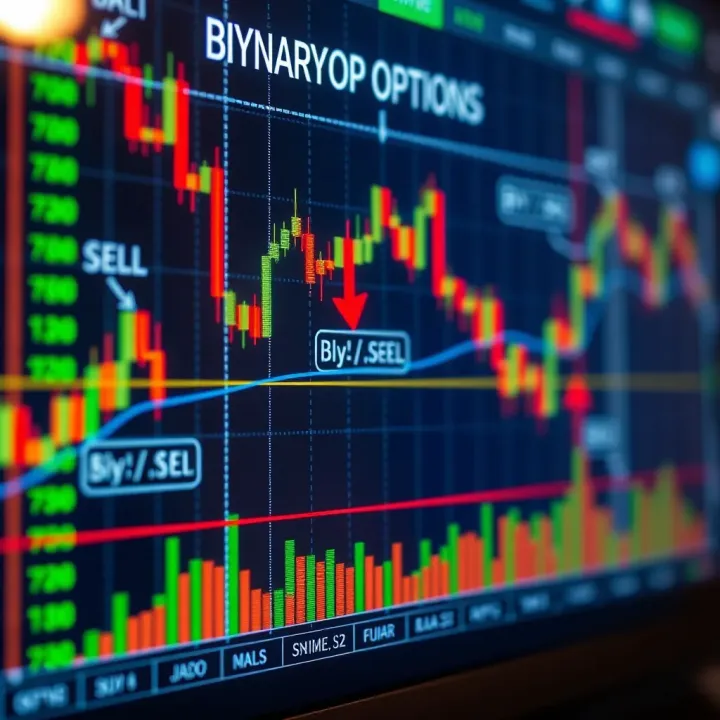
📊 Explore binary options trading in Nigeria! Learn how it works, spot risks & rewards, pick the right brokers, and protect your investments wisely.

🔍 Find top binary options brokers in Nigeria! Learn about regulation, platform features, asset choices, trading tools & support to trade smartly.
Explore how TradingView boosts your binary options trading with clear chart tips, key benefits, and risks to watch out for. 📊💡
Based on 15 reviews