
Understanding Binary Brokers for Nigerian Traders
🔍 Learn how to pick the best binary brokers in Nigeria, understand risks, and trade wisely in binary options with our detailed guide for traders. 💼💡
Edited By
Oliver Hastings
Derivative contracts are financial agreements whose value depends on an underlying asset, like stocks, commodities, currencies, or indices. In Nigeria, these instruments have gained traction, particularly among traders, investors, and businesses seeking to manage risks or speculate on price movements.
There are several common types of derivatives found in Nigeria's markets:

Futures contracts: Agreements to buy or sell an asset at a set price on a future date. For example, a Nigerian agric business might lock in the price of maize today to avoid losses if prices drop during harvest.
Options contracts: These give the buyer the right, but not the obligation, to buy or sell an asset at a specified price within a certain period. Investors in the Nigerian equities market use options to hedge against downside risks or lock in profits.
Swaps: Contracts where parties exchange cash flows or liabilities, often relating to interest rates or currencies. Nigerian banks and corporations sometimes use interest rate swaps to manage exposure to changing borrowing costs.
Derivatives serve two main purposes in Nigeria's financial ecosystem: risk management and speculation. Businesses often rely on derivatives to shield against price volatility, while traders use them to gain leveraged exposure without owning the underlying asset.
Understanding how derivatives operate in Nigeria requires awareness of local market conditions. For instance, naira exchange rate fluctuation and commodity price volatility create opportunities and risks that derivatives can address. However, these contracts also carry the risk of significant losses if not carefully managed.
The regulatory environment for derivatives in Nigeria is evolving. The Securities and Exchange Commission (SEC) Nigeria oversees derivative trading activities, ensuring transparency and protecting investors. Meanwhile, the Nigerian Stock Exchange (NGX) has introduced derivative offerings to widen investment options.
Practical uses of derivatives by Nigerian businesses include:
Hedging foreign exchange risk: Importers locking in exchange rates to avoid naira depreciation impacts.
Managing interest costs: Corporations swapping floating interest payments for fixed rates to stabilize finance charges.
Portfolio diversification: Investors using index futures to take positions on market trends with limited capital.
Grasping derivative contracts can unlock new tools for traders and investors interested in Nigeria's financial markets. But remember, these products need a clear strategy and understanding of the risks involved to benefit effectively.
Derivative contracts play a significant role in Nigeria’s financial markets by offering tools that manage risk and enhance investment opportunities. These contracts derive their value from underlying assets, allowing investors and businesses to speculate on price movements or protect themselves against adverse market changes. Understanding how derivative contracts work is essential for traders, investors, and financial analysts who want to navigate Nigeria’s complex market environment effectively.
A derivative contract is a financial agreement between parties whose value depends on the price of an underlying asset. Unlike buying the asset directly, investors use derivatives to gain exposure or hedge risks without owning the asset itself. For example, a trader might enter a futures contract on Nigerian Agricultural Commodities Exchange to buy maize at a set price in three months, even if the actual delivery hasn’t occurred yet. This approach helps in locking prices and avoiding losses caused by fluctuations.
In Nigeria, derivatives often reference various underlying assets, including:
Foreign exchange rates: Businesses dealing with imports and exports use derivatives to manage naira-dollar volatility.
Interest rates: Banks and companies hedge against unpredictable Central Bank of Nigeria (CBN) monetary rate changes.
Commodities: Crude oil, cocoa, and agricultural products like cassava and maize form a basis for commodity derivatives.
Equities: Some derivatives derive value from shares listed on the Nigerian Exchange Group (NGX).
Each underlying asset reflects a particular risk or opportunity that the derivative contract can exploit or protect against.
Derivatives provide practical solutions for managing financial risks. Take, for instance, an importer in Lagos who expects to pay $100,000 in three months. To avoid bearing the brunt of naira depreciation during that period, the importer can enter a forward contract to fix the exchange rate now. This guarantees predictability in costs and protects profit margins.
Similarly, a bank concerned about interest rate hikes may use interest rate swaps to switch from variable to fixed rates, thus stabilising repayment obligations. These contracts do not just reduce risk; they also help companies plan budgets better and maintain business continuity despite market uncertainties.
Understanding derivatives isn’t just for big financiers; even medium-scale businesses in Nigeria's bustling markets can leverage these contracts to safeguard their operations against price shocks and currency swings.
In summary, derivative contracts act as powerful financial tools that connect asset prices with tailored strategies for hedging and investing. Familiarity with the basics, common underlying assets, and risk-management methods prepares market participants to engage confidently in Nigeria’s evolving financial landscape.
Understanding the types of derivative contracts common in Nigeria is key for traders, investors, and financial analysts who want to navigate the local market effectively. Each type serves distinct purposes and carries specific risks and benefits. Being familiar with these contracts helps market participants manage risk and seize investment opportunities in Nigeria's financial environment.
Futures contracts are agreements to buy or sell an asset at a predetermined price on a future date. In Nigeria, futures are widely used for commodities like crude oil and agricultural products such as cocoa and palm oil. For example, a palm oil processor might enter into a futures contract to lock in prices ahead of the harvest season, avoiding price swings caused by weather or export demand. Options, on the other hand, give the buyer the right, but not the obligation, to buy or sell an asset at a set price before a specific expiry date. Nigerian investors use options to hedge currency exposure, especially when dealing with dollar-denominated transactions amid naira volatility. Both instruments provide ways to manage future price uncertainties effectively.
Swaps and forwards are popular tools among Nigerian corporations and banks to manage financial risks. Swaps typically involve exchanging cash flows related to interest rates or currencies. For instance, a Nigerian bank may swap fixed interest payments for floating ones to adjust its debt profile in response to CBN interest rate changes. Forwards are customised contracts between two parties to buy or sell an asset at a specific price on a future date, often used in currency transactions. A Nigerian exporter might enter into a forward contract to secure the dollar amount receivable from overseas sales, protecting against naira depreciation. These contracts help businesses with predictable cash flow planning and reduce exposure to market fluctuations.
Commodities derivatives play a significant role in Nigeria’s economy given the country's reliance on oil, gas, and agricultural products. Commodity traders and producers use derivatives to hedge against price volatility. For example, a company involved in exporting crude oil can use commodity options to protect revenue against sudden price drops caused by global supply-demand shocks. Similarly, farmers growing cocoa or maize may use commodity futures contracts to ensure a certain price for their produce, reducing uncertainties before harvest. These instruments contribute to stabilising incomes and supporting better financial planning across sectors linked to commodities.
In Nigeria, derivatives not only aid risk management but also enable market participants to capitalise on price movements, improving overall financial resilience.
By grasping how futures, options, swaps, forwards, and commodity derivatives function locally, traders and investors can make more informed decisions suited to Nigeria’s unique financial market conditions.
Derivatives serve concrete purposes in Nigeria's financial landscape, especially in shielding businesses and investors from uncertainties. Their practical use is closely tied to managing risks that arise from currency fluctuations, interest rate changes, and speculative investment activities. These tools enable stakeholders to navigate Nigeria’s often volatile economic environment more confidently.
Nigeria’s reliance on imports and oil exports exposes many companies to foreign exchange (forex) risk. Variations in the naira exchange rate can quickly erode profit margins or inflate costs. Through currency forwards or options, companies lock in exchange rates to protect themselves. For example, a manufacturing firm importing machinery from China can use a forward contract with a bank to fix the naira-to-dollar rate for payment due in three months. This move safeguards the company against naira depreciation between contract sign and payment date, preventing unexpected losses.
This sort of hedging is particularly relevant given the naira's ongoing pressure against the dollar and euro. Businesses that ignore forex risks often run into problems during ember months, when currency demand spikes. Derivatives provide a clear line of defence in these periods.
Interest rates in Nigeria can shift due to monetary policy changes from the Central Bank of Nigeria (CBN) or macroeconomic shocks. Companies with significant loans benefit from interest rate swaps or futures to convert variable loan rates into fixed ones, stabilising debt servicing costs.
Consider a commercial real estate developer with ₦500 million in variable-rate loans facing rising interest rates. By entering into an interest rate swap, they can pay a fixed interest rate while receiving a variable rate, effectively capping their borrowing costs. This approach helps avoid sudden spikes that could strain cash flows or derail projects.
Banks and financial institutions also rely on derivatives to balance their loan portfolios and maintain profitability amidst rate volatility.
Beyond hedging, derivatives attract traders and investors seeking profit from price movements. Speculators use options and futures to bet on currencies, commodities, or equities without owning the underlying assets. Although this amplifies potential gains, it also carries high risk.
Nigerian investors increasingly engage in such strategies on platforms like the Nigerian Stock Exchange (NGX) and through authorised brokers. Speculation can provide liquidity and price efficiency but requires careful risk management to avoid significant losses.
Derivatives in Nigeria offer more than just complex financial jargon; they are practical tools businesses and investors rely on daily to cushion against currency swings, shield from rising borrowing costs, and seize market opportunities.
To sum up, understanding how derivatives function practically positions market participants to safeguard their wealth and capitalise on market movements despite the economic uncertainties common in Nigeria’s financial markets.
Understanding the risks connected to derivative contracts is essential for anyone active in Nigeria’s financial markets. Derivatives serve as tools for managing risks, but they also carry their own challenges. Being aware of these pitfalls helps traders, investors, and financial analysts make informed decisions while protecting their capital.
One key risk with derivatives is counterparty risk—the chance that the other party in the contract fails to meet their obligations. In Nigeria, this risk is quite real, especially in over-the-counter (OTC) markets where contracts are negotiated privately without central clearing. For instance, a company hedging its foreign exchange exposure through a forward contract may face losses if their counterparty defaults amid currency volatility.
Market risk also plays a significant role. The price of underlying assets like oil or currency can swing sharply due to political unrest, policy changes by the Central Bank of Nigeria (CBN), or global economic shocks. These fluctuations can lead to losses if the derivative position moves against the holder. Traders must evaluate both counterparty stability and market volatility before entering contracts.
Liquidity—or how easily derivatives can be bought or sold without affecting prices—is often limited in Nigeria's markets. Unlike developed economies where futures and options trade continuously, Nigerian derivatives markets are relatively thin. Low trading volumes can make it hard to exit positions promptly, especially for large-sized contracts.
This liquidity shortage means wider bid-ask spreads, increasing transaction costs. For example, a commodities trader trying to offload a maize futures contract might struggle to find a buyer without accepting a much lower price. This risk is even more pressing during ember months, when market activity slows, potentially locking traders in positions longer than planned.
Despite growing interest, many Nigerians remain unaware of how derivative contracts operate. This knowledge gap extends to institutional investors and smaller businesses alike. The technical nature of derivatives—like pricing models and settlement mechanisms—can be daunting without proper education.
Moreover, access to derivative markets often requires digital literacy and reliable internet connectivity, which are inconsistent in several regions. Banks and brokerage firms have started organising training sessions, but uptake remains uneven. Without bridging this educational divide, many market participants risk entering derivative contracts without fully understanding the consequences.
Successfully navigating Nigeria’s derivative market depends not only on recognising opportunities but also on managing these inherent risks. Careful assessment and continuous learning are vital for sustainable participation.
In summary, counterparty defaults, market swings, liquidity constraints, and limited awareness present real challenges for derivative users in Nigeria. Traders and investors must evaluate these factors closely to safeguard their investments in this growing but complex market.
The regulatory framework plays an essential role in shaping how derivative contracts operate within Nigeria’s financial markets. Given the complex nature of derivatives, clear rules and oversight help protect investors, foster market confidence, and prevent abuse such as market manipulation or fraud. This balance ensures that derivatives can be effectively used for risk management and investment without exposing the economy to systemic shocks.
The Securities and Exchange Commission (SEC) Nigeria is the primary regulator for the capital markets, including derivatives trading on securities exchanges. SEC regulates product approval, licensing of market operators, and disclosure requirements to protect investors. For example, SEC mandates that any new derivative product issued for trading on the Nigerian Stock Exchange (NGX) undergoes thorough review for transparency and risk assessment.
SEC also enforces rules on insider trading and market conduct to curb unfair advantages. Traders and brokers must submit regular reports to SEC, enhancing regulatory oversight. Through these measures, SEC aims to build market integrity and encourage greater participation by institutional and retail investors.
While SEC handles capital market derivatives, the Central Bank of Nigeria (CBN) oversees derivatives linked to currencies and interest rates, especially those used by banks and financial institutions. CBN supervises foreign exchange (FX) forwards, interest rate swaps, and other instruments that affect the banking sector’s stability.
CBN’s policy directives influence how banks hedge against naira volatility or interest rate swings. For instance, during times of naira pressure, the CBN may tighten regulations on currency derivatives to control speculative activities. Its role complements SEC’s by safeguarding monetary stability and the overall banking system.
Market participants, including brokers, dealers, and institutional investors, must meet strict compliance rules before engaging in derivatives trading. These include registration with SEC or CBN, maintaining minimum capital thresholds, and adopting robust risk management systems.
Participants must also adhere to know-your-customer (KYC) and anti-money laundering (AML) regulations to prevent illicit transactions. Regular audit and reporting obligations ensure that trading activities are transparent and traceable.
Compliance isn’t just bureaucratic red tape; it builds trust and reduces systemic risks in Nigeria’s still-developing derivatives market.
In practice, brokers like Stanbic IBTC and investment firms such as ARM often establish in-house compliance teams to navigate these regulatory demands. Meeting these requirements allows them to offer derivatives products confidently and securely to clients.
Overall, Nigeria’s regulatory framework for derivatives balances market innovation with investor protection. Understanding these regulatory aspects helps traders and investors engage with derivatives more safely and strategically.
🔍 Learn how to pick the best binary brokers in Nigeria, understand risks, and trade wisely in binary options with our detailed guide for traders. 💼💡
Explore how Nigerian traders can seamlessly use Deriv on TradingView 📈. Get practical tips, learn key features, and navigate local regulations effectively.
Explore the Volatility 100 Index 📊—learn how it works, trading strategies, risks, and key tips tailored for Nigerian traders interested in this dynamic market tool.
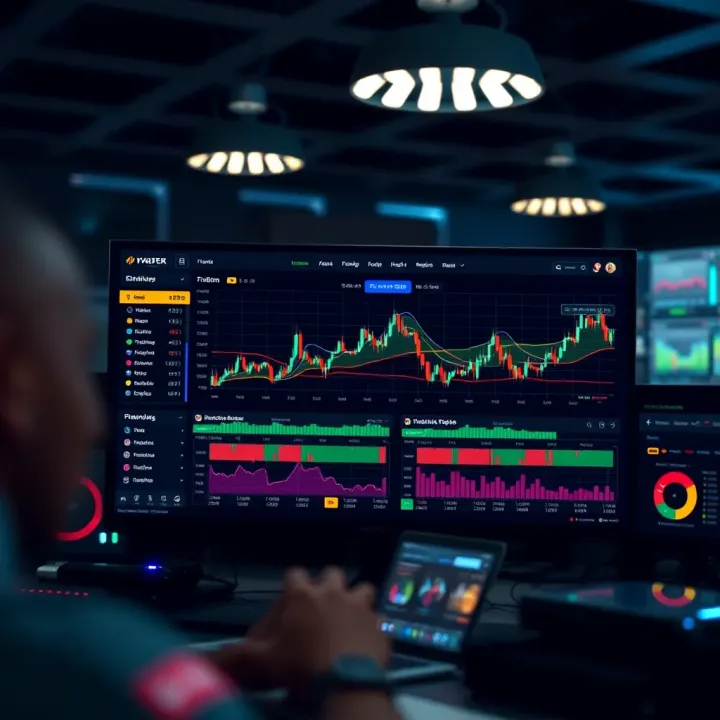
Discover how Nigerian traders can pick the best global trading platform 🌍 with insights on fees, security, features, and local regulations for smoother trades 📈.
Based on 12 reviews