
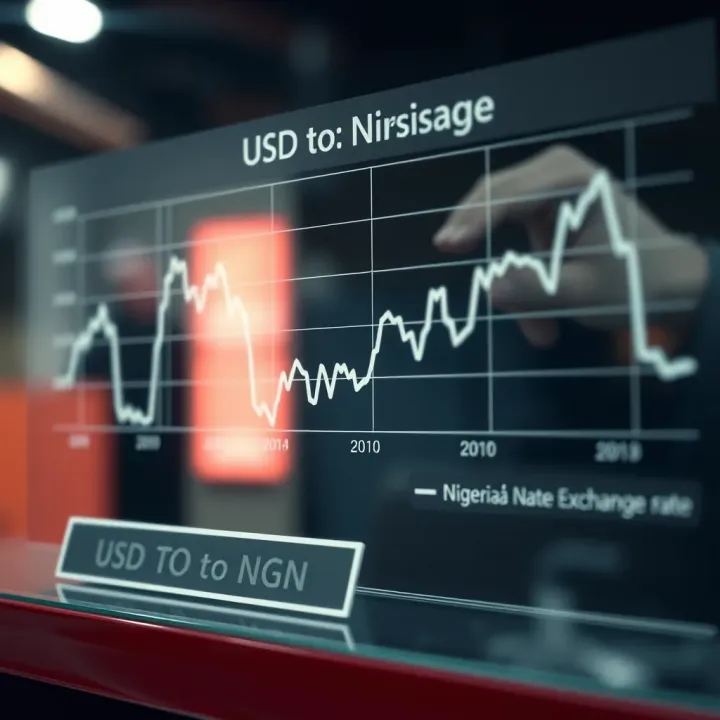
USD to NGN Exchange Rate and Nigeria's Economy
Explore how the USD to NGN exchange rate affects Nigeria’s economy 💱, influencing business decisions and everyday finances. Learn about key drivers and CBN roles.
Edited By
Henry Wilson
The Nigerian Naira remains under pressure against the US Dollar as this week unfolds, with traders and investors watching market shifts closely. Exchange rate movements now respond not just to foreign exchange reserves but also to fresh economic signals like inflation trends, petroleum subsidy adjustments, and Nigeria’s trade balance.
Last week ended with the Naira slipping against the Dollar on the parallel market, reaching around ₦820 to $1 in Lagos, while the official Central Bank of Nigeria (CBN) rate stayed at about ₦460. This divergence reflects underlying tensions in supply amid persistent dollar demand from importers, especially in sectors like manufacturing and oil and gas.

Traders should note that the gap between the official and parallel rates continues to widen, signalling underlying liquidity issues and speculative reactions in the market.
On the global front, the US Dollar's strength is bolstered by the Federal Reserve's hawkish stance amid inflation concerns, which tends to attract capital flows to the US and exert pressure on emerging market currencies like the Naira. This international dynamic intersects with Nigeria’s local factors, including ongoing fuel subsidy talks and government revenue outlook, adding complexity to the currency's trajectory.
For market players, this week will likely feature:
Increased volatility due to policy deliberations by the CBN and government statements on import regulation.
Persistent parallel market activity, as supply constraints and importer dollar demand remain high.
Opportunities for arbitrage between official and black market rates, though risks persist.
Investors should watch closely for CBN announcements on forex interventions and possible policy tweaks ahead of the Monetary Policy Committee meeting. Businesses trading internationally need to factor in the likely continued divergence in exchange rates when planning costs and pricing.
In sum, the Naira-dollar outlook this week requires careful tracking of both global monetary trends and Nigeria’s internal economic signals. Making informed decisions now can help avoid losses and capitalise on subtle market moves.
Understanding the current state of the Naira against the dollar is essential for any trader or investor tracking currency trends. This overview lays out where the naira stands right now and offers context that explains recent movements and market responses. Knowing this helps you make better decisions, from timing your trades to anticipating policy effects on your portfolio.
The official exchange rate remains the benchmark used by banks and large corporations in Nigeria. As of this week, it has shown relatively stable movements, hovering around ₦460 to ₦465 per US dollar. This steadiness stems largely from recent foreign exchange interventions by the Central Bank of Nigeria (CBN) that aimed to curb volatility. For investors, this stability indicates modest predictability in official forex channels, reducing sudden shocks to international trade costs or cross-border investments.
The parallel, or black market, rate typically reflects more immediate supply and demand forces outside official regulation. Currently, the parallel market rate trades roughly at ₦730 to ₦750 per dollar, significantly higher than the official rate. This gap signals persistent forex scarcity and strict FX controls within the regulated window. Traders relying solely on official rates might underestimate dollar costs; knowing the parallel market rate is key for small importers and informal sector businesses managing real-time naira value erosion.
The recent adjustments in fuel subsidy have pushed petrol prices upward, which tends to influence the naira-dollar rate indirectly. Fuel subsidy removal increases operational costs across sectors, particularly transport and manufacturing. This drives inflation and raises import demands, pressuring the naira against the dollar. Politically, subsidy reforms also affect investor confidence, often tightening forex flows temporarily. Monitoring these changes offers insight into short-term exchange rate pressures beyond typical market factors.
The Central Bank has deployed several strategies, including sales of foreign currency reserves and targeted forex auctions, to stabilise the naira. These interventions act as buffers against speculative attacks and liquidity shortages. For forex traders, understanding when and how CBN intervenes is crucial because these actions often reverse or dampen sudden exchange rate swings, creating windows for strategic entry or exit.
CBN's monetary policy rate (MPR) impacts naira value by influencing inflation and borrowing costs. Currently set above 18%, the high MPR aims to control inflation, which recently peaked near 22%. Persistent inflation erodes purchasing power, affecting the volume of dollars needed for imports. Traders and investors watch these indicators closely, as a hike or cut in the MPR tends to signal forthcoming naira strength or weakness, respectively.
Foreign exchange restrictions, such as limits on dollar access for certain imports or offshore transactions, continue to shape naira dynamics. These controls restrict the free flow of dollars, often widening the gap between official and parallel rates. For traders, awareness of these rules is vital since breaches carry regulatory risks, but also because such restrictions can create arbitrage opportunities. Nonetheless, repeated clampdowns may dampen foreign investor appetite, affecting naira liquidity.
Keeping a close eye on the current naira-dollar status, alongside Central Bank actions and market rates, provides a solid footing for navigating the forex market this week.
Understanding the economic fundamentals behind the naira-dollar exchange rate is essential for traders, investors, and financial analysts. The value of the naira against the dollar does not exist in a vacuum; it responds directly to shifts in key sectors like oil prices, inflation, and foreign investments. Keeping an eye on these factors offers practical advantages, such as anticipating market moves and making informed decisions.
Nigeria's economy heavily depends on crude oil exports, so any changes in OPEC (Organisation of Petroleum Exporting Countries) policies or global crude prices affect the naira directly. For instance, if OPEC decides to cut production, the global price of oil might rise, improving Nigeria's earnings from exports. This strengthens the naira as more dollars flow into the country. Conversely, when OPEC increases supply or faces global demand drops, oil prices may fall, resulting in less forex inflow and downward pressure on the naira.
Recent fluctuations in crude prices demonstrate this link clearly. For example, when Brent crude dipped below $70 per barrel earlier this year, the naira saw weakening pressure because Nigeria’s oil revenues diminished. Traders should monitor OPEC meetings and geopolitical developments as these often trigger rapid exchange rate changes.
Apart from global prices, Nigeria’s own oil production and export capacity influence naira stability. Disruptions like pipeline vandalism or strikes in the Niger Delta reduce export volume even if prices remain stable, limiting dollar supply domestically. On the flip side, improvements in production or successful export deals boost forex inflows.
For example, Nigeria’s crude production averaged around 1.4 million barrels per day recently, below its OPEC quota, mainly due to operational challenges. This shortfall constrains dollar availability for the Central Bank of Nigeria (CBN), encouraging a weaker naira in the parallel market. Therefore, beyond global trends, local supply issues remain a significant driver for exchange rate forecasts.

Inflation reduces the purchasing power of the naira, influencing demand for dollars. When the Consumer Price Index (CPI) rises sharply—as it did during recent ember months—people and businesses see their costs increase. This usually pushes Nigerians to seek dollars for imports or saving abroad, boosting demand and causing naira depreciation.
Monitoring CPI changes helps predict exchange rate moves. For instance, a steady inflation rate above 15% prompts investors to expect further naira weakness, affecting their portfolio and trading choices.
A rising inflation rate also drives up the cost of imported goods, many of which Nigerians rely on, such as electronics, vehicles, and medicines. As importers pay more dollars, they often pass these costs to consumers, creating a feedback loop that increases demand for dollars further.
For traders and exporters, understanding how inflation affects import demand clarifies market pressures. A spike in inflation might lead to higher dollar purchases at the parallel market as businesses try to hedge costs, signalling possible exchange rate adjustments ahead.
Foreign portfolio investors (FPIs) influence naira demand significantly when they buy or sell Nigerian equities on the Nigerian Exchange Group (NGX). Increased purchases bring dollars into the market, helping stabilise the naira. However, sudden sell-offs or capital flight reduce forex supply.
For example, during bouts of global uncertainty, FPIs have pulled billions of naira out of Nigerian stocks, stressing the foreign exchange market. Traders tracking NGX inflows and outflows get early warnings of potential currency volatility.
Foreign Direct Investment (FDI) tends to be more stable and long-term compared to portfolio flows. Continued FDI in sectors like telecommunications, fintech, and agriculture means sustained dollar inflows, contributing to naira support.
Recently, Nigerian fintech start-ups have attracted significant FDI, hinting at increased foreign capital entering the country. This helps moderate naira depreciation by boosting dollar availability outside oil earnings. Analysts consider rising FDI a positive sign amid other economic challenges.
By focusing on these economic indicators—oil prices, inflation, and foreign investment—market players can better navigate the complexities of the naira-dollar rate and adapt their strategies accordingly.
Expert opinions and market forecasts serve as vital tools for traders and investors navigating the currency market this week. They offer a snapshot of potential movements in the naira-dollar exchange rate, helping market players make informed decisions amid volatility. Rather than relying solely on past trends, these insights consider current economic signals and policy shifts to provide a more immediate outlook.
Analysts pay close attention to market sentiment and emerging news, which often drive short-term fluctuations. Their forecasts can alert businesses and investors to impending risks or opportunities, enabling quick adjustments to trading strategies or hedging positions. For example, if experts anticipate a sharp dip in the naira, importers might postpone dollar purchases, while exporters could expedite converting foreign earnings.
Short-term projections focus on expected naira-dollar exchange rate movements over the next days or weeks. These forecasts are usually based on recent market activity, CBN interventions, and global economic conditions. For instance, after CBN's latest forex auction, some analysts predicted a marginal weakening of the naira due to increased dollar demand from fuel importers following subsidy adjustments.
Such projections are especially useful for day traders and forex dealers who operate on tight timing, as well as businesses managing immediate foreign exchange needs. By tracking these short-term signals, they can better time their transactions, potentially saving costs or avoiding losses caused by sudden swings.
Global factors like US Federal Reserve interest rate decisions, dollar index movements, and commodity prices heavily influence naira exchange rates. A recent uptick in US treasury yields, for example, tends to attract capital away from emerging markets, putting pressure on currencies like the naira.
Nigerian traders and investors must therefore monitor these global indicators closely. If international markets signal a stronger dollar, naira holders might brace for depreciation. Conversely, a drop in oil prices or easing US monetary policy could ease pressure on the naira by reducing capital flight.
Government fiscal measures—such as revised budgets, changes in public expenditure, or tax policy announcements—play a big role in shaping currency trends. For example, an unexpected increase in government borrowing could raise concerns about debt sustainability, weakening confidence in the naira.
On the other hand, efforts to boost revenue collection or reduce wasteful spending can strengthen the naira by improving Nigeria's fiscal health. Market watchers closely evaluate such updates to gauge their potential to influence foreign exchange flows and investor sentiment.
Adjustments in forex regulations by the Central Bank of Nigeria (CBN) often dictate dollar availability and naira stability. Recent moves to tighten forex access on non-essential imports aimed to protect reserves but also created tensions in the parallel market, widening exchange rate gaps.
Understanding these policy shifts is critical for businesses and individuals relying on foreign currency. For instance, a relaxation in forex restrictions might lower costs for importers and reduce pressure on parallel market rates. Hence, staying informed about CBN's evolving stance can guide better financial planning and risk management decisions.
Market participants who keep tabs on expert forecasts and government pronouncements are better positioned to adapt swiftly to changes, protecting their operations and investments from unexpected shocks.
Understanding how the naira-dollar exchange rate shift affects everyday life is crucial for Nigerians. This section breaks down what businesses, consumers, and investors should expect in practical terms. Real consequences play out in costs, pricing, and investment ladders, so knowing the dynamics helps in making better decisions amid volatility.
Businesses face direct pressure when the dollar rises against the naira. Import-dependent firms, especially those in manufacturing and retail sectors, often see increased expenses for raw materials and finished products. For instance, a garment company sourcing fabric from overseas may find its costs jump suddenly, requiring tighter budgeting or sourcing alternatives. Companies have been increasingly using hedging tools or negotiating longer-term contracts to stabilise costs and avoid surprise hikes.
Fluctuating exchange rates complicate pricing decisions for traders. Importers might pass on higher prices to consumers, risking demand shrinkage, while exporters could benefit if the naira weakens, making Nigerian goods cheaper abroad. A Lagos-based electronics dealer, for example, must balance the rising dollar price for gadgets with market willingness to pay. Exporters in agribusiness may seize opportunities to expand market share if global prices hold firm, but they also face risks if international demand dips or transport costs rise.
For many Nigerians, the naira’s instability means imported goods, including foodstuffs and electronics, become less affordable. Consumers should prioritise budgeting carefully, focusing on essentials and resisting impulse buys on imported brands that could get pricier quickly. Shopping at local markets or mama puts for staples like eba or amala can help mitigate the pinch, especially during ember months when spending usually spikes.
Buying dollars for travel, education, or online subscriptions demands strategic timing. Since naira rates can shift within days, it pays to monitor official exchange rates through banks or known digital platforms like OPay or Flutterwave. Planning purchases when rates dip even marginally can save hundreds or thousands of naira. Avoid rushing to buy dollars when rates hit peaks on the parallel market, as this can erode personal budgets rapidly.
Speculating on naira-dollar movements can be tempting but comes with heavy risks. Sudden monetary policy changes or global economic events can sway the rates unexpectedly. Traders dealing in forex markets need solid risk management strategies, including setting stop-loss limits and staying updated through credible financial news outlets to avoid severe losses.
Despite exchange rate challenges, the Nigerian stock exchange offers opportunities, especially in export-focused sectors or companies with strong dollar revenues. Investors might explore Nigerian equities denominated in naira but benefiting from foreign inflows or diversification into sectors less sensitive to currency swings, like telecommunications or agriculture. Platforms like the Nigerian Exchange Group (NGX) and fintechs such as Piggyvest provide accessible entry points.
Staying informed and adapting behaviour to current exchange trends can save costs, protect investments, and offer new windows for business growth and personal finance management.
Understanding the broader trends beyond this week's dollar-naira exchange rate helps traders and investors anticipate shifts that could affect their portfolios and strategies. While weekly forecasts offer immediate guidance, the longer-term outlook provides perspective on structural changes and economic policies that shape currency value over time. This insight equips market players to make informed decisions, even amid daily volatility.
The Nigerian government’s planned economic reforms will likely influence the naira-dollar rate over the coming months. Measures such as improving foreign exchange reserve management, revising subsidy frameworks, and enhancing revenue mobilisation through agencies like the FIRS can stabilise the currency. For example, if the government successfully increases foreign direct investment by streamlining business regulations, the resulting inflow of dollars would ease pressure on the naira.
Practical relevance is clear: businesses and investors should track reform announcements closely as these can signal shifts in currency stability. A reform that strengthens fiscal discipline may reduce inflation and slow naira depreciation, benefiting importers and those with dollar-denominated liabilities.
Global factors, including shifts in oil prices and US interest rates, continue to affect the naira. Nigeria’s heavy reliance on oil earnings means global oil price drops can weaken foreign exchange inflows, leading to naira depreciation. Additionally, when the US Federal Reserve raises interest rates, foreign capital tends to flow to the dollar, increasing naira pressure.
For traders and investors, monitoring these external trends is crucial. For instance, a sudden OPEC production cut could boost oil prices, indirectly strengthening the naira. Conversely, tightening monetary policy in the US might slow dollar outflows, compelling the naira to adjust accordingly.
Keeping an eye on announcements from the Central Bank of Nigeria (CBN), the Nigerian National Petroleum Corporation (NNPC), and financial news outlets like BusinessDay or Nairametrics is essential. These sources provide timely updates on policy shifts, economic data, and market reactions that impact exchange rates.
For example, if the CBN announces a new forex intervention policy, traders need quick access to gauge its potential effect on liquidity and demand. Regular monitoring ensures investors adjust their positions promptly, avoiding losses or seizing opportunities.
Digital tools such as exchange rate tracking apps, email newsletters, and social media feeds offer real-time market information. Platforms like OPay, Kuda, or financial aggregators allow users to set alerts for target exchange rates or receive push notifications on major developments.
Staying connected via these platforms helps you react swiftly to market movements. For instance, receiving an immediate alert of a naira dip on the parallel market enables forex dealers or importers to act before rates worsen, preserving capital and operational efficiency.
To navigate the naira-dollar landscape effectively, combining long-term outlook awareness with real-time monitoring is vital. This approach minimises surprises and enhances preparedness amid an ever-changing market.
Explore how the USD to NGN exchange rate affects Nigeria’s economy 💱, influencing business decisions and everyday finances. Learn about key drivers and CBN roles.
📉 Explore the factors behind the Naira's fall and what experts say about its future. Discover key trends and economic signals for Nigeria's currency.

Explore XT Exchange 🔍: its features, trading options, fees, and security. Learn why Nigerian crypto traders find it reliable and what risks to watch.

📈 Explore Avax Coin price trends and tech updates to help Nigerian investors navigate crypto markets confidently. Get insights for smarter decisions! 🇳🇬
Based on 5 reviews