
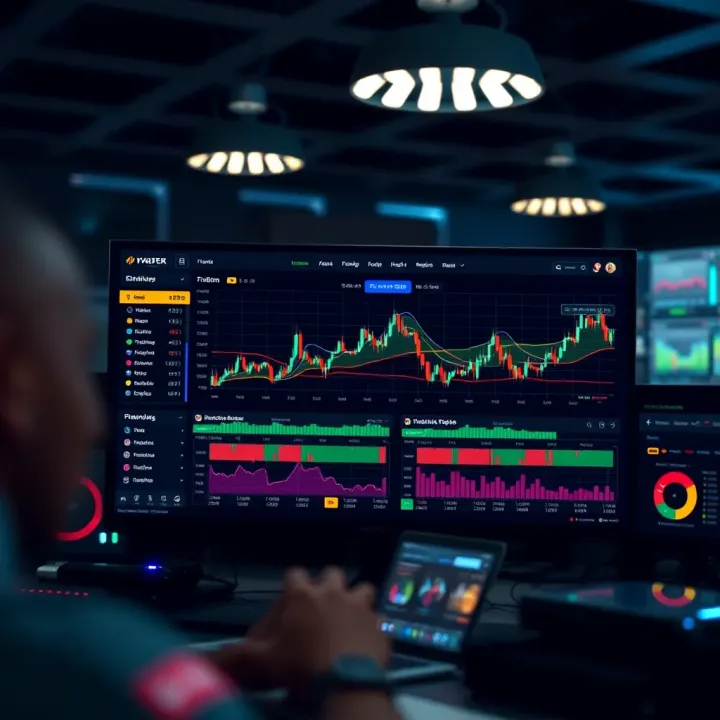
Best Trading Platforms for Nigerian Traders
Discover how Nigerian traders can pick the best global trading platform 🌍 with insights on fees, security, features, and local regulations for smoother trades 📈.
Edited By
Joshua Bennett
Boom and Crash trading has carved a niche among Nigerian investors looking beyond traditional markets like stocks or forex. These synthetic indices, especially Boom 1000 and Crash 1000, offer unique opportunities with distinctive price movements that differ from typical asset classes.
At their core, Boom and Crash indices simulate price spikes (booms) and drops (crashes) over a short timeframe. Boom indices present sharp upwards jumps amid generally flat or declining prices, while Crash indices show sudden dips contrasting with rising or steady trends. Nigerian traders appreciate this volatility since it creates chances for quick gains if timed right.

Understanding these assets means grasping their highly volatile, jump-driven nature. For example, Boom 1000 typically features one strong spike approximately every thousand ticks, a pattern Nigerian traders can exploit by opening trades just before anticipated jumps. However, blind speculation rarely works; it’s about reading price behaviour around these spikes to enter or exit positions profitably.
Success in Boom and Crash trading demands discipline, sound risk management, and knowledge of how these indices behave distinctively compared to familiar markets.
To get started effectively, Nigerian investors should prioritise trading via regulated platforms with responsive customer support and good naira funding options to avoid friction during deposits or withdrawals. Platforms offering demo accounts help sharpen strategies without risking real money, ideal for beginners.
Key points Nigerian traders must keep in mind:
Volatility: Expect sudden price moves; weights should be conservative.
Leverage use: Too high leverage can wipe out capital rapidly; use modest multiples.
Timing: Study recent price spikes to inform entry points.
Stop-loss orders: Critical to prevent large losses from unexpected jumps.
Mastering Boom and Crash trading requires practice and a steady nerve, but with the right approach, Nigerian investors can add an effective tool to their trading portfolio. This article will next break down practical strategies tailored for these assets, helping you trade smarter and safer.
Grasping the nature of boom and crash markets is fundamental for anyone serious about trading these synthetic indices. Understanding how these markets behave guides investors in making timely decisions, managing risks effectively, and tailoring strategies to the unique price movements typical of boom and crash trades. For Nigerian investors, who often face market volatility and local economic fluctuations, this knowledge is particularly valuable.
Boom and crash indices are synthetic financial instruments that simulate price movements, showing sudden sharp rises (booms) or crashes (drops) in value. Unlike physical assets like stocks or commodities, these indices are created by brokers and do not rely on actual underlying markets. Instead, they follow programmed algorithms designed to generate predictable but volatile patterns. This makes them attractive for traders seeking high-volatility environments without the complications of traditional markets.
These indices differ from traditional assets because their prices are not affected by real-world events, company earnings, or economic data. Instead, boom and crash indices operate on fixed rules and algorithmic behaviour, allowing traders to focus on technical analysis and pattern spotting. This characteristic can reduce the noise often present in conventional markets, but it also demands a strict approach to strategy and risk management.
Specifically, Boom 1000 and Crash 1000 are popular variants where “1000” refers to the maximum value of the index. Boom 1000 moves mostly upward with sudden price spikes, whereas Crash 1000 tends to trend down with sharp drops. For example, in Boom 1000, the market may climb steadily, then jump abruptly before stabilising, offering particular entry points for buying positions. These dynamics present distinct opportunities which savvy traders can exploit using well-planned timing.
Volatility in boom and crash markets is generally higher than many Nigerian financial assets. Because these are synthetic, their spikes and drops can be more exaggerated and frequent. This volatility enables traders to capture quick profits if they correctly anticipate price actions, but it also increases exposure to sudden losses. For instance, a trader caught off-guard during an unexpected crash spike might lose a significant portion of their capital swiftly.
Typical market movements include gradual trends interrupted by sudden, sharp surges or drops, often outside the usual market rhythms experienced in Nigerian equities or forex. These triggers can be algorithmically timed, not reactive to news. For example, a Boom 1000 market might gradually rise for several minutes before a sharp boom spike hits, creating an excellent but narrow window to enter or exit trades, provided the trader reads the pattern well.
Price fluctuations in these indices are influenced mainly by built-in algorithms and programmed volatility levels. External factors like Nigerian market news or political events usually have little direct impact, unlike traditional stocks or forex pairs. That said, the trader’s choice of broker and platform, their execution speed, and order types (stop loss, take profit) play a crucial role in managing the effect of these frequent price swings and deciding profitability.
Successfully trading boom and crash indices hinges on understanding their mechanical volatility and unique price patterns rather than relying on fundamental analysis. Practical familiarity with these behaviours improves timing and risk control, essential for thriving in this niche market.
By keeping these key considerations in mind, Nigerian investors can approach boom and crash trading with greater confidence and clearer expectations, optimizing their chances for consistent gains in this fast-moving domain.
Understanding the core principles behind boom and crash trading can significantly improve your chances of success, especially in volatile markets like these. Essentially, this strategy revolves around timing your trades correctly and recognising patterns that indicate strong price movements. For Nigerian investors, who may face unique market conditions and platform limitations, sticking to these principles helps avoid costly mistakes and spot genuine opportunities.
Recognising boom spikes and crash drops is crucial because these sharp price movements offer clear moments to enter or exit trades. For example, if you observe the Boom 1000 index suddenly surging with strong momentum, seizing that moment can lock in profits before the price retraces. Similarly, spotting a sudden dip in the Crash 1000 index signals a potential entry for a reversal or a short-term bounce.
Using technical indicators helps confirm these price actions. Traders often rely on tools like the Relative Strength Index (RSI) or Moving Averages to time their entries. For instance, an RSI below 30 could indicate the asset is oversold, suggesting a buying opportunity during a crash drop. Likewise, crossover points in moving averages may signal trend reversals, helping you avoid guesswork in timing trades.

Avoiding premature entries matters because jumping in too early before the price confirms a move exposes your capital to unnecessary risk. Nigerian traders sometimes rush trades due to FOMO or inadequate market analysis, which often leads to losses. Waiting for clear signals such as candle closes beyond resistance levels or confirmation from volume spikes increases your chances of a successful trade.
Spotting bullish and bearish trends applies directly to how boom and crash assets behave. A bullish trend in Boom 1000 means consecutive higher highs and higher lows, signalling confidence in rising prices. Conversely, a bearish trend in Crash 1000 shows lower lows and lower highs—a cue to consider short positions or avoid buys.
Common chart patterns like double tops, head and shoulders, or flag formations also appear in synthetic indices and provide valuable clues. For example, a head and shoulders pattern during a boom spike might warn of an imminent reversal. Recognising these helps traders decide whether to hold onto positions or exit before losses mount.
The implications for short- and long-term trades vary. Short-term traders focus on quick spikes or drops, capitalising on rapid price movements within minutes or hours. Long-term traders, however, look for sustained trends and solid patterns to build larger profits over days or weeks. Knowing which approach fits your style and capital availability is key, especially in Nigeria where market access and trading hours may influence your strategy choice.
Mastering when to enter and exit, combined with understanding trends and patterns, forms the backbone of any effective boom and crash trading strategy.
Adhering to these key principles not only shields your capital but also sharpens your judgement amid market noise. Traders in Nigeria who apply these thoughtfully often outperform those relying on guesswork or hearsay alone.
Trading boom and crash indices requires more than just knowing the market basics; it demands practical, hands-on techniques that help traders manage volatility effectively. Nigerian investors face unique challenges such as fluctuating naira values and unreliable power supply, making practical strategies like precise stop loss settings and smart position sizing especially vital. Understanding how to apply these techniques can save you from losing capital unduly and maximise your profits in unpredictable market swings.
Setting effective stop loss levels helps you limit losses when the market moves against your position. For instance, if you enter a trade expecting a boom spike, placing your stop loss just below recent support levels ensures you exit early if the market crashes instead. It’s essential to avoid setting stop losses too close, as normal market noise might trigger them prematurely, or too far, which could expose you to bigger losses.
Maximising gains through target profits involves setting take profit points at realistic levels where the market often reverses after trends. For example, if you notice a typical boom spike rises about 20 points, setting your take profit just below that height captures gains before a likely drop. This disciplined approach prevents greed from clouding your trade decisions, which often leads to missed profit-taking opportunities.
Adjusting orders based on market behaviour means being flexible. Volatile markets like boom and crash indices rarely behave exactly as predicted; hence, moving your stop loss or take profit as the trade progresses—known as trailing stops—protects profits while allowing more room for the trade to develop. Nigerian traders dealing with sudden spikes due to economic news or local market hours benefit if they adapt their orders in real-time rather than sticking rigidly to initial plans.
Calculating risk per trade is the foundation of sensible trading. Generally, risking 1–2% of your total trading capital per transaction keeps you afloat even during losing streaks. For instance, if your trading account holds ₦200,000, risking only ₦2,000 to ₦4,000 per trade aligns with steady growth instead of risking everything on a single position.
How to size positions relative to account balance means adjusting trade volume so losses stay within your risk limit. If your stop loss is 10 points away, position size must be small enough that losing those points costs no more than your risk percentage. This calculation ensures that even if the worst happens, your capital doesn’t take a big hit.
Avoiding overexposure in volatile markets like boom and crash indices is crucial. It might be tempting to load up on many trades expecting quick gains, but too many open positions simultaneously multiply risks, especially when naira faces downward pressure or economic uncertainties flare. Prioritising quality over quantity, and avoiding chasing every spike or drop, gives you room to breathe and think clearly.
Discipline in applying stop losses, take profits, and position sizing turns hope into a well-oiled trading plan—essential for success in Boom and Crash markets.
By mastering these practical techniques, Nigerian investors can navigate boom and crash trading with greater confidence and control. Practical tools sharpened by local realities create an edge that’s more than just theoretical—a difference you can actually feel at the end of your trading day.
Managing risks in boom and crash trading is essential for Nigerian investors aiming to protect their capital and sustain consistent gains. These synthetic indices, although attractive due to their volatility, can turn against traders quickly if risks are not properly handled. By understanding common risks and applying mitigation strategies, investors can reduce losses and enhance their chances of success in this unpredictable market.
Sudden market reversals pose one of the biggest challenges in boom and crash trading. These reversals happen without warning, shifting from a bullish spike to a sharp drop or vice versa. For instance, a trader who buys into a boom expecting prices to surge may suddenly face a rapid crash triggered by an unexpected market event. Without protective measures like stop-loss orders, this can wipe out profits — or worse, capital altogether. Nigerian investors often face added pressure due to limited access to real-time news and market updates, making it harder to anticipate these swings.
Technical glitches and platform reliability also weigh heavily on traders' minds. Interruptions in internet connections, server downtimes, or platform crashes can prevent you from executing timely trades or closing positions. There have been cases where Nigerian traders lost out due to power outages or unstable network providers hindering their access to trading platforms at critical moments. Selecting a reliable broker with robust infrastructure is vital to reducing this risk, especially since unstable tech setups can amplify losses in fast-moving boom and crash markets.
Emotional trading pitfalls emerge when traders let their feelings drive decisions rather than logic. Fear and greed often lead to chasing losses or overtrading after a win. For example, a trader who experiences consecutive losses might increase their stake recklessly, hoping to recover quickly — a common trap known as revenge trading. This behaviour usually escalates losses and erodes confidence. Nigerian traders should develop emotional control, recognising that market swings are normal and sticking to pre-defined trading plans mitigates impulsive actions.
Maintaining discipline with trading plans is central to managing risk. A clear plan outlines entry and exit points, stop losses, position sizes, and target profits. For example, deciding in advance to exit a crash trade if it hits a 2% loss prevents bigger setbacks. Discipline ensures you don’t abandon your strategy mid-trade because of short-term emotions or market noise. Nigerian traders often benefit from writing down and reviewing their plans regularly to keep focused amid market excitement or tension.
Using demo accounts for practice offers a safe environment to test strategies without risking real money. Platforms like Deriv provide these accounts, allowing traders to understand boom and crash behaviours and refine timing. Many Nigerian investors jump into live trading without enough practice, which increases risk. Repeated practice in demo mode builds confidence and skill, enabling smoother transitions into actual markets.
Diversifying trading approaches reduces exposure to a single market scenario. This could mean balancing short-term trades during volatile periods with longer-term strategies or mixing trades on different synthetic indices like Boom 500 and Crash 1000. Relying only on one method or asset increases vulnerability if that approach stalls. By spreading trades and adapting methods, Nigerian investors can smooth returns and limit the impact of adverse moves in any one area.
In boom and crash trading, managing risk is not a one-time task but continuous practice. Balancing discipline, practice, and diversification equips Nigerian investors to handle the market’s ups and downs with steadiness and confidence.
For Nigerian investors venturing into boom and crash trading, choosing the right trading platform is vital. The platform not only facilitates your trades but also shapes your entire experience – from the ease of funding your account to the speed of execution and customer support. Since boom and crash indices are highly volatile synthetic assets, the platform's reliability and features become especially important to manage risks and capture opportunities.
Regulation ensures that brokers follow rules protecting investors' funds and uphold fair trading practices. Nigerian investors should prioritise brokers regulated by well-known authorities like the Cyprus Securities and Exchange Commission (CySEC), UK’s Financial Conduct Authority (FCA), or the Australian Securities and Investments Commission (ASIC). Regulated platforms usually segregate client funds and offer dispute resolution mechanisms, which is crucial when trading volatile assets like boom and crash indices.
Choosing unregulated brokers can expose you to scams or operational risks, such as sudden platform downtime or withdrawal issues. For example, Nigerian traders often prefer brokers with clear regulatory status to avoid the kind of problems some experienced during the 2020 ember months, when rushed trading amid volatility stressed many platforms.
Trading costs cut into profits directly, so understanding transaction fees is non-negotiable. Boom and crash indices typically come with fixed spreads, which represent the price difference between buying and selling. Lower spreads mean smaller gaps to overcome before you make a profit, making tight spreads preferable.
Besides spreads, keep an eye on commissions and overnight fees if you hold positions longer. Some brokers offer zero-commission trading on synthetic indices but compensate with wider spreads. For Nigerian investors, transaction costs must line up with expected trading frequency — if you plan quick trades targeting small gains, tight spreads are essential to stay in the green.
Not all platforms offer synthetic indices like Boom 1000 or Crash 1000. Ensuring your chosen broker lists these instruments is a must. Some Nigerian traders mistakenly sign up with brokers focusing mainly on forex or commodities, only to realise later that synthetic indices are absent.
Platforms specialising in synthetic markets or those connected to providers like Deriv.com give broader access to boom and crash indices. This availability enables you to diversify strategies, switching between various boom/crash pairs that behave differently across sessions.
Among trusted names accessible to Nigerians, Deriv.com is notable for its focus on synthetic indices, including multiple boom and crash options. Other platforms like IQ Option and Binary.com (now evolved into Deriv services) also provide these indices with user-friendly interfaces.
While some international brokers might offer wider asset classes, they might not have the tailored synthetic indices that boom and crash traders want. Nigerian investors should compare features like minimum deposit requirements, customer support responsiveness, and educational resources alongside the available instruments.
Ease of deposit and withdrawal remains a practical factor. Platforms offering Nigerian Naira funding through options like bank transfer via GTBank, Access Bank, or Paystack allow seamless transactions without irritating currency exchange delays or extra charges.
Withdrawal processes should be swift and transparent. Some brokers might insist on minimum withdrawal limits or charge fees that shrink your earnings. Nigerian traders particularly value platforms allowing quick naira withdrawals to local accounts, avoiding the headache of foreign currency conversions and delays.
Given the mobility of many Nigerian traders juggling daily work and traffic hassles, mobile app usability is key. A smooth, stable app that updates prices in real-time, lets you place trades fast, and manages your account without glitches is a huge advantage.
Apps from Deriv and IQ Option score high on user experience, with clean interfaces designed for both beginner and advanced traders. Nigerian networks can be patchy sometimes, so platforms optimised for low bandwidth and stable mobile connections create better trading conditions, reducing frustration from missed trades or slow order execution.
Choosing the right platform tailored to Nigeria's trading landscape can mean the difference between trading efficiently and struggling through operational hassles. Consider regulation, costs, instrument availability, payment ease, and mobile tech to get the most from boom and crash trading.
Discover how Nigerian traders can pick the best global trading platform 🌍 with insights on fees, security, features, and local regulations for smoother trades 📈.
🔍 Explore how automated trading systems work in Nigeria’s market, with benefits, risks, and tips for investors to improve trading efficiency and decisions.

Find the best trading platform in Nigeria! Explore security, costs, types, and regulations to pick the perfect fit for your trading style 📊🇳🇬

📊 Discover how to pick the best online trading platform in Nigeria 🇳🇬. Compare features, fees, security, and user experience to trade confidently.
Based on 5 reviews