
Understanding Deriv Real Account for Nigerian Traders
📈 Discover how to open and fund your Deriv real account for trading forex, commodities, and more. Get practical tips to navigate challenges and boost your ₦ trading journey.
Edited By
Charlotte Brooks
Chainlink is reshaping how smart contracts operate by connecting blockchain networks to real-world data sources. Smart contracts on most blockchains are isolated — they can't access external information directly. Chainlink solves this by acting as a decentralised oracle network that fetches, verifies, and delivers data from outside sources into blockchain environments securely.
This connection expands the usefulness of blockchain beyond static conditions to real-time responsiveness. For example, in Nigeria, a decentralized finance (DeFi) protocol might rely on Chainlink oracles to retrieve accurate foreign exchange rates or commodity prices, enabling trustworthy lending, insurance, or derivatives based on up-to-date market information.
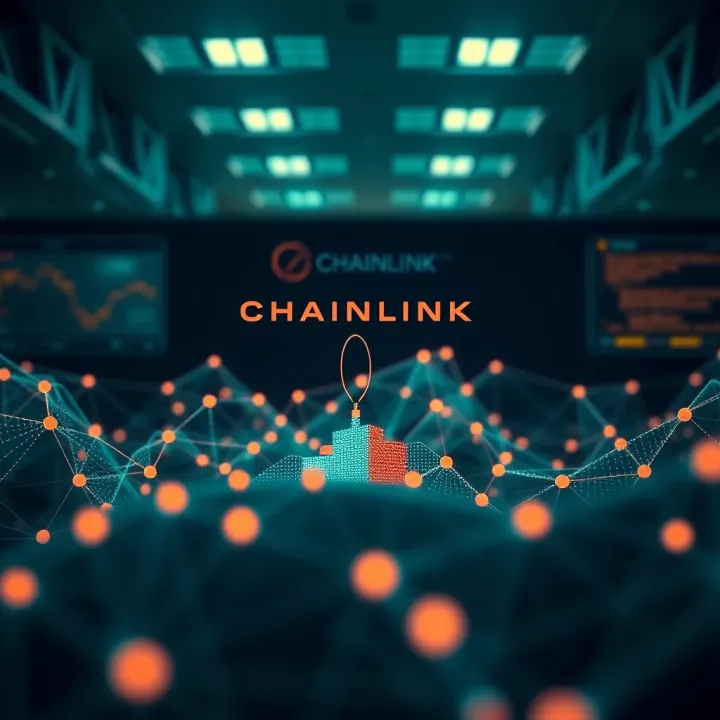
Chainlink operates through a network of independent nodes called oracles. These oracles pull data from various external APIs, traditional financial markets, IoT devices, or other off-chain systems. The nodes then aggregate and verify the data before passing it on to smart contracts, ensuring that no single data source or oracle compromises the system’s integrity.
By decentralising data provision, Chainlink reduces risks of manipulation or downtime. Traders and investors can trust that decisions made by smart contracts reflect accurate and current market conditions, an essential consideration in volatile markets like Nigerian equities or crypto assets.
Reliable Price Feeds: Chainlink powers accurate price oracles for tokens and commodities crucial to DeFi lending, borrowing, and trading.
Cross-System Automation: Nigerian banks or payment platforms can integrate smart contracts that trigger payments or settlements automatically based on real-world triggers verified by Chainlink.
Transparency and Security: By providing tamper-proof external data, Chainlink helps reduce fraud risks in syndicated loans and insurance products built on blockchain.
Trustworthy data feeds from oracles like Chainlink are foundational for growing Nigeria's DeFi ecosystem and attracting institutional investors who demand reliable and secure markets.
In the local context, projects could use Chainlink to automate payments in agritech platforms, basing contracts on weather conditions or crop prices verified off-chain. Insurance firms might deploy parametric insurance smart contracts that activate payouts automatically during floods or droughts using Chainlink-verified data.
For brokers and financial analysts, understanding Chainlink’s role helps identify which blockchain projects stand on solid data foundations — a key factor in assessing investment risks and opportunities.
Chainlink is more than just a bridge; it's a security guard for blockchain’s link to the outside world, crucial for scaling blockchain's impact in Nigeria and beyond.
Chainlink is a decentralised oracle network that acts as a bridge between blockchain smart contracts and external data sources. Unlike traditional blockchains, smart contracts alone cannot access data beyond their network. Chainlink steps in to provide real-world information—like financial market prices, weather data, or event outcomes—which allows smart contracts to trigger actions based on this verified, off-chain information.
For example, in the Nigerian context, a smart contract for crop insurance could use Chainlink to access weather data, automatically paying out farmers if drought conditions are detected. This automation reduces the need for intermediaries, cuts costs, and speeds up transactions.
Decentralised oracles are critical because they provide reliable, tamper-resistant data feeds to blockchain networks. Relying on a single oracle risks manipulation or failure, which can cause smart contracts to behave incorrectly or fail altogether. Chainlink avoids this by using multiple independent nodes to fetch and verify data before delivering it to the blockchain, ensuring the information is trustworthy.
This is especially relevant in financial trading and DeFi applications in Nigeria and elsewhere. For instance, a DeFi platform might rely on Chainlink to fetch currency exchange rates. If these rates were manipulated due to a centralised data source, traders could suffer significant losses. Chainlink’s decentralised approach mitigates such risks by combining data from several providers, creating a more resilient and secure network.
Decentralised oracles like Chainlink add a vital layer of trust and functionality, enabling smart contracts to interact securely with real-world data without compromising the blockchain’s integrity.
The practical use of Chainlink extends beyond finance. Supply chains can verify product origins using real-time sensor data, and insurance claims can be processed automatically when certain conditions are met, all powered by secure data from Chainlink oracles. This wide applicability makes Chainlink an essential component in expanding blockchain solutions beyond simple digital records.
In summary, Chainlink fills a significant gap by safely connecting blockchains with the outside world, boosting the reliability and usefulness of smart contracts across many sectors. Nigerian traders, investors, and analysts should understand this because Chainlink’s technology underpins many of the emerging fintech and DeFi products increasingly available in Nigeria’s economy today.
Understanding how Chainlink operates is key to grasping its role in connecting blockchain smart contracts with real-world data. Unlike traditional blockchain networks that process only on-chain data, Chainlink enables smart contracts to access information beyond their native environment. This feature is especially valuable for financial traders and investors who rely on accurate external data to automate contracts and trades.

Smart contracts are self-executing agreements that automatically enforce terms coded within them. However, their reach is limited to information stored directly on the blockchain. Chainlink bridges this gap by acting as an intermediary, allowing these contracts to fetch data from outside sources such as financial market feeds, weather stations, or payment APIs. For example, in a trading scenario, a smart contract may use Chainlink to get real-time stock prices or currency exchange rates before executing a buy or sell order. This mechanism reduces reliance on manual inputs and improves transaction accuracy.
By design, Chainlink’s oracles query, verify, and deliver data to smart contracts, making on-chain decisions more reliable and useful. This process helps users mitigate risks from faulty or outdated information, which is crucial for complex trading strategies or financial derivatives.
Chainlink operates through a network of independent node operators who provide external data to smart contracts. These nodes connect to various data providers — entities that own or collect raw information like banks, market data aggregators, or meteorological agencies. These data providers maintain trustworthiness by providing consistent, tamper-resistant data.
Nodes act as middlemen: they retrieve requested data, validate it, then transmit it onto the blockchain in a verifiable format. The decentralised nature of these nodes means no single point of failure or manipulation. This is a significant advantage over traditional oracles, which often rely on just one data source, increasing vulnerability.
For traders and financial analysts, this system means greater confidence that the information driving their smart contracts is accurate and resistant to fraud. It also allows for multiple data feeds to be aggregated, offering a consensus-based result that helps reduce errors or biased inputs.
Chainlink’s consensus-driven approach among nodes ensures reliable and secure data delivery, which directly impacts the trustworthiness of blockchain-based financial transactions.
By understanding the relationship between smart contracts, nodes, and data providers, stakeholders can better appreciate how Chainlink strengthens blockchain applications — making them practical for real-world use, especially in Nigeria’s emerging fintech and trading sectors.
Chainlink stands out in the blockchain space primarily because it bridges the gap between smart contracts and real-world data, a vital function for decentralised finance (DeFi) and beyond. Understanding its key features sheds light on how it maintains reliability and security while incentivising participants.
At the heart of Chainlink is its Decentralised Oracle Network (DON). Unlike single oracles that rely on one data source—making them prone to errors or attacks—Chainlink distributes data requests across multiple independent oracles. This spreads risk and prevents manipulation. Imagine a Lagos-based fintech needing reliable forex rates; Chainlink's DON pulls information from several trusted sources, cross-checks them, and delivers a consensus-driven figure to the smart contract. By using multiple nodes, it maintains transparency and guards against false data injection.
The LINK token fuels the Chainlink ecosystem by rewarding node operators for providing precise data and running their nodes efficiently. This economic incentive keeps oracles honest and motivated to maintain high uptime. For instance, if a data provider feeds incorrect data, they risk losing their LINK stake, deterring dishonest behaviour. Traders and investors should note that the LINK token's value partly reflects the network’s security and demand for trustworthy information, making it more than just a utility token.
Security remains a major concern when bridging on-chain and off-chain worlds. Chainlink implements several layers of protection to secure data integrity. One critical measure is cryptographic proof: nodes provide signed data that smart contracts can verify before execution. This approach reduces the risk of tampered inputs affecting contract outcomes. In addition, Chainlink enforces a staking mechanism where oracles stake LINK tokens as collateral, which they forfeit if found malicious. To put this into perspective, a Nigerian insurance firm automating claims settlements via Chainlink benefits from robust protection against fraudulent data, enhancing trust in automated processes.
Chainlink’s decentralised design and economic incentives form a strong foundation, ensuring smart contracts operate based on reliable and tamper-proof data.
Together, these components make Chainlink a dependable pipeline between blockchains and the unpredictable real world. Traders and financial analysts relying on DeFi oracles should appreciate how these features reduce risks, ensuring that contract executions reflect accurate, real-time information.
Chainlink plays a growing role in Nigeria’s blockchain scene and beyond by powering trustworthy connections between smart contracts and real-world data. This interfacing opens doors for practical and innovative applications that address local business needs and global demands. Understanding these use cases helps traders, investors, and financial analysts see how Chainlink adds value to DeFi ecosystems, agricultural supply chains, and automation in sectors like insurance.
Chainlink’s decentralised oracle network is vital for DeFi protocols, where accurate and timely external data such as price feeds make or break smart contract functionality. Platforms like Aave or Compound globally rely on oracle services to provide price information used in collateral valuation or liquidation triggers. In Nigeria, with increasing interest in decentralised lending and yield farming, Chainlink’s oracles can provide reliable naira/USD exchange rates, cryptocurrency prices, and market sentiment data directly to smart contracts. This transparency helps reduce counterparty risk, supports automatic repayments or liquidations, and enhances trustworthiness in local DeFi products.
Reliable data inputs from Chainlink reduce liquidity risks and guard against price manipulation, making Nigerian DeFi platforms more secure and appealing to institutional and retail investors alike.
Agriculture remains a cornerstone of Nigeria’s economy, yet current supply chain systems often lack transparency and real-time data sharing. Chainlink helps bridge this by integrating IoT data (e.g., soil moisture, weather conditions) and logistics information into blockchain applications. For example, a smart contract could automatically release payments to farmers once shipment sensors confirm delivery of produce to markets or processing centres. This reduces delays caused by paperwork and intermediaries, while ensuring payments are fair and on time. On a broader scale, Chainlink could support traceability that guarantees product origin and quality, which is essential for export markets and consumer trust locally.
The insurance sector can benefit greatly from Chainlink’s oracle technology by automating claims processing through smart contracts. Crop insurance schemes in Nigeria, often hampered by fraudulent claims or delayed verification, stand to gain from oracle-triggered payouts based on weather data or satellite imagery indicating drought or flood events. Similarly, for vehicle or health insurance, smart contracts can request verified external data to confirm incidents before releasing funds. This automation reduces costs, eliminates the need for manual claim assessments, and speeds up compensation, which enhances customer satisfaction and financial inclusion.
Chainlink’s practical applications are multiplying in Nigeria’s emerging blockchain economy. Its ability to securely connect on-chain contracts with off-chain, real-time data makes it indispensable for investors looking at the scalability and reliability of blockchain-backed financial services and agritech solutions.
Chainlink plays a major role in linking smart contracts with real-world data, but it doesn’t come without challenges. Understanding these hurdles is essential for traders, investors, and financial analysts eyeing blockchain projects that rely on oracle networks.
One of the biggest issues Chainlink faces is scaling its operations. As more projects demand real-time data, the network must handle increased requests without slowing down or becoming too expensive. Each data query involves interactions between nodes, and these require LINK tokens as payment. Higher demand pushes up transaction costs, which can be significant for use cases needing frequent updates, like price feeds in DeFi platforms. For Nigerian fintech startups, where cost efficiency is key, these fees can affect profitability. Furthermore, network congestion during peak times can lead to delays in data delivery, undermining smart contract performance.
Oracles are only as reliable as the data they provide. Even though Chainlink uses decentralised nodes to reduce single points of failure, the risk of data tampering or malicious attacks remains. Bad actors might attempt to influence oracle nodes to feed false data — for example, altering commodity prices used in agricultural insurance contracts. Such manipulation could trigger incorrect payouts or disrupt financial operations. Also, Sybil attacks, where attackers create many fake nodes, can threaten network integrity if not properly managed. Chainlink’s use of reputation systems and staking requirements helps, but the network's security depends on constant vigilance and node quality.
Blockchain and oracles operate in a regulatory grey area, especially in Nigeria where financial laws are still evolving. Regulators may scrutinise oracle providers for compliance with data protection, anti-money laundering (AML), and know-your-customer (KYC) frameworks. For instance, if Chainlink nodes handle personal or sensitive data, they could fall under Nigeria Data Protection Regulation (NDPR) rules. Plus, as oracles enable automated financial contracts, questions about liability and consumer protection arise. Companies integrating Chainlink must navigate these regulations carefully to avoid penalties or operational restrictions, which can delay innovation and adoption.
Despite these challenges, Chainlink’s design aims to balance decentralisation and reliability, but awareness of these issues helps stakeholders make better decisions.
In summary, scalability and network costs directly affect affordability and speed, data manipulation risks challenge trustworthiness, and regulatory uncertainties shape the operational landscape. Traders and investors should keep these factors in mind when evaluating oracle-based blockchain projects, particularly in dynamic markets like Nigeria’s fintech scene.
Chainlink holds significant promise for Nigeria's growing blockchain ecosystem. As the country’s fintech and tech startups seek secure, reliable ways to integrate off-chain data with smart contracts, Chainlink’s decentralised oracle network offers practical solutions to longstanding challenges. From improving financial services to streamlining agriculture and supply chain management, its future role is tightly linked to the expansion of blockchain across sectors.
For startups and fintech companies, Chainlink represents a means to add real-world data securely to their DeFi products. Imagine a Nigerian fintech building a decentralised lending platform that relies on accurate credit scores or real-time FX rates; Chainlink helps ensure this data comes from trusted sources. This reduces fraud risk and boosts investor confidence. Services like Piggyvest or Kuda, should they leverage such oracles, can create more sophisticated automated financial products.
Moreover, Chainlink enables Nigerian developers to access global APIs while maintaining the security that blockchain demands. This opens room for innovative insurance products that automatically trigger payouts based on verified weather data or crop yields. The growing number of tech hubs and incubation centres in Lagos, Abuja, and beyond can use Chainlink to develop such smart contract apps without reinventing data verification.
Chainlink’s potential integration with Nigeria's financial infrastructure is another key aspect. Central Bank of Nigeria (CBN) regulated banks and payment platforms stand to benefit from oracles that provide real-time, tamper-proof data feeds. This could improve KYC processes by cross-referencing multiple credible databases for NIN or BVN verification.
Furthermore, Chainlink may facilitate smoother foreign exchange operations within fintechs, helping address the naira’s persistent volatility by linking on-chain systems with secure external market rates. This provides traders and investors more transparency and fewer arbitrage windows, which is crucial given Nigeria's frequent FX tightening policies.
Beyond finance, Chainlink’s oracles can extend to sectors like agriculture, logistics, and energy, where accurate data triggers automated actions on blockchain platforms. For example, agritech startups could use satellite or IoT data feeds through Chainlink to monitor crop health or rainfall, automating insurance claims with minimal human intervention.
Similarly, supply chain companies can ensure provenance and authenticity of goods — like tracing the journey of fresh produce from farm to market — backed by real-time data delivered securely by Chainlink nodes. Even in the energy sector, smart contracts might rely on Chainlink to verify power generation levels or fuel consumption, aiding in transparent billing and subsidy management.
Chainlink’s decentralised oracle model fits neatly with Nigeria’s blockchain ambitions, providing a reliable bridge between off-chain data and on-chain contracts. This supports innovation, transparency, and security across sectors ready for digital transformation.
As Nigeria’s blockchain landscape evolves, the adoption of Chainlink could shift from experimental to essential, making smart contracts genuinely interconnected with the real world. This will pave the way for smarter, automated, and trustworthy applications that benefit investors, traders, and everyday users alike.
📈 Discover how to open and fund your Deriv real account for trading forex, commodities, and more. Get practical tips to navigate challenges and boost your ₦ trading journey.

📈 Learn how the S&P influences Nigeria’s stock market and economy. Get practical tips on using S&P data to make smart investments and grow your ₦ portfolio wisely.

Learn how an indices calculator simplifies powers and exponents for everyday use and academics, with practical Nigerian examples and tips 🔢📚

Learn how derivative contracts work in Nigeria’s markets 📊, with clear insights on types, risks, rules, and how businesses use them for investment and risk management.
Based on 6 reviews