
Understanding Trading Charts for Nigerian Investors
📊 Master trading charts to boost your investments in Nigeria! Learn key chart types, patterns, and indicators to make smart moves in the local market. ₦
Edited By
Oliver Hastings
Trading signals help investors and traders spot good chances in the market by giving clear cues on when to buy or sell assets. In Nigeria, where market dynamics can shift quickly due to factors like naira fluctuations, fuel subsidies, and political events, understanding these signals gives you an edge.
Simply put, trading signals are alerts or indicators based on market data and analysis that suggest optimal times to make trades. These signals come from technical analysis tools, expert systems, or algorithms tracking price trends, volume, and other metrics.
Effective use of trading signals can reduce guesswork and improve decision-making, especially in volatile markets like the Nigerian Stock Exchange (NGX) or the forex scene.
For Nigerian investors, trading signals offer practical benefits:
Timely decisions: Quickly spot when to buy shares like those of Dangote Cement or sell to avoid losses during market dips.
Access to expertise: Tap into insights from financial analysts or automated platforms without needing deep technical skills.
Risk management: Align your trades with market momentum rather than emotions or rumours prevalent during election periods or ember months.
It’s important to know that not all signals are created equal. Some use past price patterns (technical signals), while others consider economic indicators or market sentiment (fundamental signals). Using them in isolation can be risky, so many investors combine multiple signals to cross-check opportunities.
In this guide, you will learn the kinds of trading signals available, how to access them within Nigerian platforms like GTBank’s trading app or OPay’s investment hub, and tips to avoid common pitfalls. This approach will help you make the most of your capital and improve your chances of positive returns with less stress.
Understanding these tools is not just for pros but for anyone serious about growing their wealth through stocks, forex, or commodities in the Nigerian market.
This introduction sets the stage to explore trading signals closely and how they fit into Nigeria’s unique trading environment.
Trading signals are essential tools that help investors make informed decisions about when to buy or sell assets in the financial markets. For Nigerian traders, who often face market volatility and a flood of diverse information, these signals offer a way to cut through the noise. Instead of relying solely on gut feeling or hearsay, trading signals provide data-backed cues, making trading more focused and less risky.
In simple terms, trading signals are alerts or indications based on technical analysis, fundamental data, or market sentiment that suggest the optimal times to enter or exit a trade. For instance, if a technical indicator like the Moving Average Convergence Divergence (MACD) crosses a certain threshold, it might signal a change in trend – a cue for action. Nigerian traders often use such signals to time their moves in the stocks of companies listed on the Nigerian Exchange (NGX) or in the forex and cryptocurrency markets.
Trading signals come from different sources. Some are generated automatically by trading software and algorithms that analyse market data. For example, platforms like MT4 or the Nigerian brokerages offering apps use programmed indicators to notify users about trade opportunities. Others are generated by expert analysts or experienced traders who share signals through subscription services or social media groups. In Nigeria, some traders rely on local signal providers who understand the specific market dynamics influenced by domestic government policies and economic events.
A key practical benefit of trading signals is their ability to pinpoint when to buy or sell. Say the relative strength index (RSI) shows a stock listed on the NGX as oversold—this might signal a good buying opportunity before prices rebound. Likewise, a sudden surge in volume combined with other indicators can suggest it is time to exit before profits erode. Correct timing aided by signals can improve trade outcomes and preserve capital.
Trading signals level the playing field by giving beginners clear, actionable guides in markets that might otherwise seem confusing. Novices can follow signals while learning to interpret charts and news factors on their own. Experienced traders also use signals to cross-check their analysis, reduce emotional bias, and manage risk efficiently. For example, an expert might combine fundamental news about the CBN’s interest rate decisions with technical signals to decide on currency trades. So, signals are practical for all trader levels, reinforcing smart decision-making.
Using trading signals wisely can help protect your investment from sudden market swings common in Nigeria, such as fluctuations caused by fuel scarcity or political unrest.
In summary, trading signals matter because they translate complex market data into clear prompts that guide your trading strategy in the Nigerian market. They come from reliable tools and seasoned experts and help you make better timing decisions, whether you are new or have trading experience.
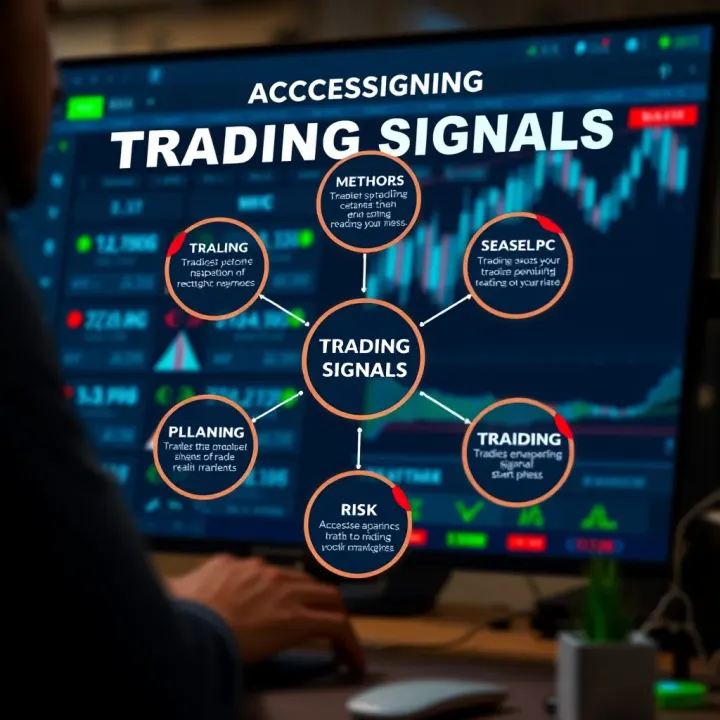
For Nigerian traders, understanding the common types of trading signals is a practical starting point to improve investment decisions. These signals help decipher market movements and guide timing for buying or selling assets. Nigerian markets, with their unique volatility and economic factors, call for a mix of technical and fundamental signals tailored to local realities.
Moving averages and crossovers help traders identify trends by smoothing out price data over a specific period. A simple moving average (SMA) might track the average price over the last 20 days, for example. When a short-term moving average crosses above a long-term one, it often suggests a buying opportunity—this is the crossover signal. Nigerian investors watching NGX stocks can use moving averages to spot momentum shifts and avoid buying stocks in a downtrend. For instance, if GTBank’s 20-day moving average crosses below its 50-day average, that signal could warn of a potential price drop.
The Relative Strength Index (RSI) measures the speed and change of price movements on a scale of zero to 100 to indicate overbought or oversold conditions. An RSI above 70 suggests the asset might be overbought and due for a pullback, while below 30 signals oversold status and a possible rebound. Nigeria’s forex traders often use RSI on currencies like USD/NGN to decide when the naira is undervalued or overvalued, considering factors like CBN interventions.
Moving Average Convergence Divergence (MACD) combines moving averages to reveal momentum changes and potential entry or exit points. It tracks the difference between short-term and long-term moving averages and plots that as a line, alongside a signal line. When the MACD line crosses the signal line, it hints at a change in trend direction. Nigerian investors may use MACD on agricultural commodity prices or NSE shares to catch early trend reversals, especially during ember months when volatility spikes.
Economic data and corporate announcements play a vital role in shaping fundamental trading signals in Nigeria. Releases such as inflation rates, unemployment figures, or CBN policy rates impact market sentiment and trading decisions. For example, a sudden hike in the CBN monetary policy rate often leads to a bullish signal for bank stocks, as higher interest rates can improve bank margins. Earnings reports from listed companies also provide clues; a strong quarterly profit for a company like Dangote Cement often encourages buying signals from investors.
News events influence trading signals significantly, especially in Nigeria’s fast-moving markets. Political developments, election outcomes, or shifts in oil prices often trigger immediate market reactions. Traders might spot signals in reaction to fresh government policies on fuel subsidies or foreign exchange controls. Monitoring credible news sources helps investors anticipate market swings, allowing timely decisions rather than reacting late. For instance, a report of fresh sanctions or delays in crude exports could signal caution or sell-offs in energy sector stocks.
Successful Nigerian traders blend technical and fundamental signals, adapting them to local market conditions, to better navigate the often unpredictable market environment.
By understanding these common types of signals, Nigerian investors can sharpen their analysis and position themselves more strategically in the market.
Trading signals are valuable tools that help Nigerian traders decide when to buy or sell assets. Knowing where to get these signals and how to use them effectively can boost your chances of success in volatile markets like ours.
Brokerage firms and trading platforms often provide trading signals as part of their services. For instance, platforms like GTBank's InvestPlus or Trade360 might offer market insights and alerts to registered users, making it easy for traders to act promptly. These institutions usually rely on in-house analysts and algorithms to generate signals tailored to local market conditions, such as the Nigerian Stock Exchange (NGX).
Subscription services and signal providers have also become popular among Nigerian traders. Companies like FX Signals Nigeria offer daily or weekly signals for forex and stocks via SMS, WhatsApp, or email. While these services can save time, it’s important to verify their track record before subscribing. Some providers promise quick profits but lack consistency, leading to losses when markets move unpredictably.
Social media and trading communities serve as informal hubs where Nigerian traders share signals and market ideas. Platforms like Telegram groups or Twitter threads dedicated to NGX stocks or forex provide real-time tips and analysis. However, the reliability varies widely in these spaces. For example, a lively WhatsApp group might share signals based on hearsay rather than solid analysis, so cross-checking before acting is essential.
Combining signals with personal strategy is key. Blindly following signals without considering your risk appetite or market understanding can backfire. Suppose a trading signal recommends buying a specific stock; if it clashes with your technical analysis or financial goals, it’s wise to pause and reassess. Using signals as one part of your strategy, not the whole plan, helps align trades with your personal style.
Risk management basics cannot be overlooked. Nigerian markets can be volatile, with factors like naira fluctuations or political events causing sudden price swings. Always set stop-loss orders to limit potential losses and avoid investing more than you can afford to lose. For example, if you get a signal to buy a stock at ₦100, decide in advance the maximum drop you can tolerate—say ₦90—to exit automatically.
Using demo accounts to test signals offers a safe environment to understand how signals work without risking actual money. Many Nigerian brokers, such as Access Bank Securities or Kuda, provide demo platforms where you can practise buying and selling based on signals. Testing strategies here allows you to gauge the accuracy of signals and refine your approach before moving to live trading.
Using trading signals wisely demands combining credible sources with your knowledge and sound risk controls. This approach increases the chance of steady gains, even amid Nigeria’s unpredictable market conditions.
Trading signals can offer helpful guidance, but Nigerian traders need to be aware of the risks and limits involved. Blindly trusting these indicators without understanding their weaknesses can lead to losses, especially in volatile and unpredictable markets like ours.
False signals and market volatility often trip up traders. For example, during periods of high naira volatility or unexpected political events, signals may suggest entering or exiting trades that quickly reverse. These false alerts can make investors lose money if they act too fast without confirming the signal.
Also, Nigerian markets are influenced by sudden government policies or fuel scarcity, causing price swings that disrupt how signals perform. A moving average crossover might suggest a buy, but a disruptuon like a fuel hike could send prices tumbling shortly after.
The danger of overdependence on trading signals is real. Some traders treat signals as the sole decision-maker, ignoring their own research or market insight. This overreliance reduces their ability to react to unexpected events, such as a sudden CBN policy shift or FX market intervention.
For instance, relying only on signals during the ember months—when market activity spikes and becomes less predictable—can be costly. Signal tools are meant to support decisions, not replace personal judgement.
Scams and unreliable providers have also become a problem in Nigeria’s growing online trading community. Some providers promise guaranteed profits using trading signals but deliver little or no value.
Unscrupulous operators may sell fake signals or disappear after collecting subscription fees. Traders must be cautious, as this practice wastes funds and erodes trust in legitimate services. Unfortunately, the rush to profit can blind many to these risks.
Verifying signal providers is a key safety step. Double-check their track record, transparency, and user reviews before subscribing. Trustworthy providers are open about their methods and performance.
Look for those endorsed by well-known Nigerian brokers or trading platforms and avoid services that cannot show credible results. For example, a firm connected to a reputable brokerage like GTBank’s trading desk offers more assurance than unknown startups.
Using signals as part of a broader analysis improves decision-making. Combine signals with fundamental research—such as company earnings, macroeconomic data, or political developments relevant to Nigeria. This approach balances different angles and reduces reliance on any single indicator.
Employ multiple signal types (technical, news-based) and check them against your trading goals. For example, a basic moving average crossover combined with a positive corporate announcement might boost confidence to enter a trade.
Setting stop-loss orders is another practical defence. Stop-losses limit potential losses by automatically closing positions when prices hit predetermined levels. They shield traders from sudden downturns sparked by false signals or market shocks.
Many Nigerian online brokers and platforms offer easy ways to set stop-loss orders for equities, forex, or commodities.
Trading signals should be tools, not crutches. Nigerian investors who verify providers, apply broader research, and use risk controls like stop-losses stand a better chance of navigating market ups and downs safely.
Evaluating the effectiveness of trading signals is essential for Nigerian investors who want to make profitable decisions rather than follow tips blindly. Not all signals perform well across different market conditions, so knowing which ones yield good returns and when prevents costly mistakes. Nigerian markets, often impacted by local economic news and currency volatility, require signals that hold up under these unique pressures.
Success rates and win-loss ratios offer a direct way to judge a signal’s value. Simply put, this ratio compares how many times a signal predicts a winning trade versus a losing one. For example, if a trading signal targets the Nigerian Stock Exchange (NGX) stocks and hits the mark 7 out of 10 trades, its 70% success rate suggests a reasonable edge. However, investors should avoid signals boasting unrealistically high success rates, as these can be cherry-picked or overly optimistic.
Tracking win-loss ratios over weeks or months helps screen out signals that perform well by chance. A signal that consistently delivers profits, even if modest, proves more reliable than one that spikes only occasionally. For instance, a signal service focusing on forex pairs like USD/NGN that shows steady returns through Nigeria’s sometimes uncertain foreign exchange environment will be more useful than one fluctuating wildly.
Consistency over time matters just as much as success rates. The Nigerian market is sensitive to events like CBN policy changes or fuel subsidy decisions that disrupt trading patterns. Signals that adapt and maintain reasonable accuracy during such volatility offer better protection for investors. Consistent signals reduce the stress of second-guessing and help traders stick to their strategy rather than chasing hype.
Investors should observe performance data across different market cycles—for example, comparing signal outcomes during the ember months versus quieter periods. A dependable signal might deliver 60% wins in stable months and still hold above 50% during turbulent times, indicating practical resilience. Consistency also means avoiding signals that deliver big profits one month and major losses the next.
Aligning signals with your trading style and goals ensures better integration and results. If you prefer short-term trades, a signal service that identifies quick entry and exit points for NGX shares or forex pairs is ideal. Conversely, long-term investors looking to build wealth over years may favour signals based on fundamental trends, such as corporate earnings or macroeconomic indicators like inflation rates.
Setting clear goals, whether it’s making daily profits for side income or growing a retirement fund, helps filter signal providers. Nigerian investors trading with limited capital should focus on signals that respect risk levels to prevent blown accounts. For example, a trader aiming to leverage ₦100,000 shouldn’t chase aggressive signals suited for portfolios worth millions.
Considering Nigerian market-specific factors expands signal effectiveness. Local developments—political elections, fuel scarcity, or sudden currency depreciation—influence asset behaviour uniquely compared to global markets. Signal services that incorporate or respond promptly to such factors tend to outperform generic international signals.
Assessment should also cover if the service covers assets popular in Nigeria like NGX equities, commodities like crude oil, or currency pairs including USD/NGN. Services focusing narrowly on US or European markets might offer little advantage to Nigerian traders. Therefore, pick providers who understand or specialise in Nigerian market conditions and regulatory environment.
Evaluating trading signals carefully avoids falling for scams or unreliable tips, equipping you with tools that suit your style and the dynamics of Nigerian markets. The right choice makes the difference between regular profits and unnecessary losses.
📊 Master trading charts to boost your investments in Nigeria! Learn key chart types, patterns, and indicators to make smart moves in the local market. ₦
Explore derivative trading in Nigeria 📈 Learn how to manage risk, diversify portfolios, and navigate the market with practical tips for Nigerian investors. ₦

📈 Discover how Nigerian investors can use copytrading to follow experts, understand the risks and benefits, and start smart investing today. 🇳🇬💼
📈 Learn how the S&P influences Nigeria’s stock market and economy. Get practical tips on using S&P data to make smart investments and grow your ₦ portfolio wisely.
Based on 11 reviews